
Villa del Balbianello, on the western shore of Lake Como near Lenno, is one of those venues that photographs have never fully prepared me for. I had seen hundreds of images before I shot there for the first time, the loggia arches, the terraced gardens, the lake stretching toward the mountains, and still, arriving by boat for the first time, the scale and the beauty of it stopped me.
It is managed by the FAI, the Fondo Ambiente Italiano, which means it is maintained to an extraordinary standard and access is carefully controlled. For couples, this translates into grounds that are always immaculate, restrictions that protect the integrity of the space, and a level of logistical complexity that requires an experienced team to navigate well.

I have photographed weddings and private events at Villa Balbianello multiple times, in different seasons and different light conditions. What follows is everything I have learned about the venue, about the photography, about the logistics, distilled into a guide that I hope is genuinely useful rather than simply descriptive.
If you are considering Villa Balbianello for your wedding and want to understand how photography works at this venue specifically, this is the guide I would have wanted to read before I shot there for the first time.
Getting to Villa Balbianello — The Boat Transfer and Arrival Logistics
Villa Balbianello sits on a small peninsula on the western shore of Lake Como, near the village of Lenno, and is accessible only by boat or on foot via a private path through the woods. For weddings, the arrival by boat is not just a logistical necessity. It is one of the most cinematic moments of the entire day, and one that deserves to be treated as such rather than rushed.
Boats depart from Lenno or Sala Comacina, a crossing of just a few minutes across the water. But the approach to the villa from the lake, with the loggia emerging above the treeline, the terraced gardens dropping toward the water, and the mountains behind, is something I have never seen fail to move a couple. The scale of the place only becomes clear from the water. From the road or the dock at Lenno, you see very little. From the boat, everything reveals itself at once.
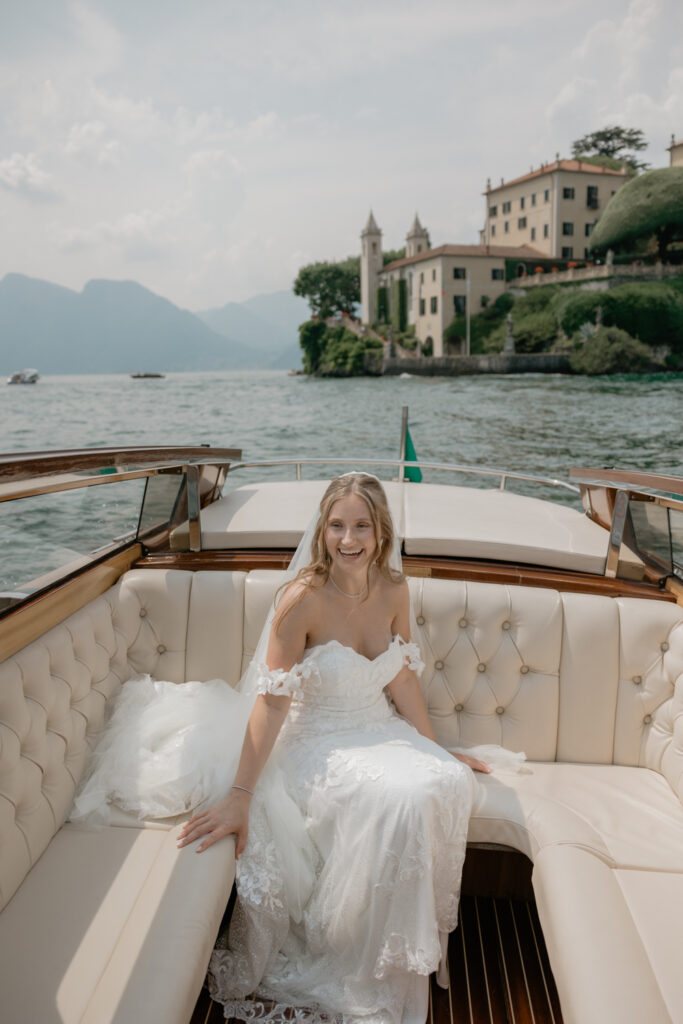

It is worth building the boat arrival into your photography timeline as a dedicated moment rather than treating it as pure transportation. I position myself on the dock or on a second boat to capture the arrival, the couple stepping off, the villa behind them, the lake light reflecting off the water. These images have a quality that is genuinely different from anything you can capture on land, and they contextualise everything that follows.
Early morning crossings, before the day-trip tourist boats begin circulating the lake, have a particular quality of light and stillness that is impossible to replicate later in the day. If your timeline allows for morning preparations at the villa, the boat crossing at seven or eight in the morning, with mist still on the lake and the mountains just catching the first light, is one of the most extraordinary arrivals I have photographed anywhere in Italy.
Practically speaking, coordinate with your wedding planner and the FAI, the Fondo Ambiente Italiano, the Italian National Trust which manages the property, well in advance on boat arrangements, timing, and guest logistics. The dock at Villa Balbianello has limited space, and coordinating the arrival of guests, vendors, and the wedding party requires careful sequencing. The FAI has specific protocols for wedding days that your planner needs to be familiar with, including restrictions on certain areas of the property and timing of access. Beginning this conversation with the FAI at least twelve months before your date is not excessive. It is genuinely necessary.
Photographing at Villa Balbianello — What I Have Learned From Shooting Here
The loggia is the obvious starting point and it is obvious for good reason. The stone arches framing the lake, the carved columns catching the afternoon light, the particular way the shadows fall across the terracotta floor in the hour before sunset, these are the images that most people associate with Villa Balbianello, and they are as extraordinary in person as they appear in photographs. But the images that tend to surprise couples when they see the gallery are often from elsewhere on the property, in spaces that are less photographed and therefore feel more personal.
The garden path that leads from the dock up through the terraced grounds, lined with camellia, wisteria, and ancient olive trees, is extraordinary in spring when everything is in flower. Walking this path with a couple in the early morning, when the light is still cool and the gardens are quiet, produces images that feel genuinely intimate, more like a private moment than a wedding portrait. The scale of the planting, the age of the trees, the way the path curves so that you never see the full length of it at once, all of this creates a depth and layering that is difficult to find anywhere else on Lake Como.
The small chapel near the entrance to the property catches morning light through a narrow window that creates natural fill light for portraits without any additional equipment. In the right conditions, a clear morning in May or early June, the light inside the chapel is as beautiful as anything I have seen in Italy. It is a small space and requires careful positioning, but the results justify the effort.

The boathouse terrace, lower than the main loggia and facing north across the lake toward Bellagio, gives a completely different perspective. More intimate, less grand, but with the water much closer and the reflections more present. On still mornings, the lake surface acts as a mirror and doubles the sky and mountains in every frame. It is a quieter, more contemplative space than the loggia, and couples who spend time there often produce their most relaxed and natural portraits of the day.
For timing, my recommendation is this: arrive early enough to shoot the preparations or first look in the gardens before the ceremony, use the ceremony itself for documentary coverage, and then keep the couple for thirty to forty-five minutes after guests have moved to cocktails for the loggia portraits during golden hour. That window, when the light hits the stone from the west and the lake goes silver and the mountains turn blue in the distance, is when Villa Balbianello does what it does best. Do not let it pass for the sake of cocktail hour. The light will not come back.
One practical note on permissions: the FAI restricts flash photography in certain areas of the villa and has specific rules about where photographers can position themselves during the ceremony. These are not onerous restrictions, but they require advance knowledge. A photographer who has not worked at Villa Balbianello before will encounter them for the first time on your wedding day, which is not the ideal moment. Experience with the venue translates directly into better images and a less stressful day.
History of Villa del Balbianello
Villa del Balbianello was built in 1787 by Cardinal Angelo Maria Durini on the site of a former Franciscan monastery, located on the promontory of Lavedo overlooking Lake Como. Durini envisioned the villa as a place of retreat and intellectual exchange, hosting literary and philosophical gatherings. After his death, the villa passed through various owners, each contributing to its refinement and beauty.
In the 19th century, the Porro family took ownership and enhanced the gardens. In 1919, American businessman Butler Ames purchased the villa and restored it. However, its most famous owner was Guido Monzino, an Italian explorer, who acquired the villa in 1974. Monzino filled the interiors with treasures and artifacts from his many expeditions, including items from his ascent of Mount Everest. Upon his death in 1988, Monzino bequeathed Villa del Balbianello to the Italian National Trust (FAI), ensuring its preservation.


Today, the villa is a popular tourist destination, famous for its stunning gardens, breathtaking views of Lake Como, and appearances in films like Casino Royale and Star Wars: Episode II. Currently, Villa del Balbianello stands as a testament to centuries of history, from its beginnings as a cardinal’s retreat to its role as a modern cultural treasure. Its timeless beauty, framed by the natural splendor of Lake Como, continues to make it a beloved destination for visitors and a symbol of Italian elegance. The combination of its rich history, enchanting location, and architectural beauty makes Villa del Balbianello a symbol of elegance and romance, attracting visitors and couples from all over the world.
Take Advantage of Villa Balbianello’s Scenic Views
Villa Balbianello’s scenic beauty is one of its most striking features, offering endless opportunities for breathtaking wedding photography. Its elevated position overlooking Lake Como, framed by dramatic mountains and lush, manicured gardens, provides a setting where every corner feels like a masterpiece waiting to be captured. Whether it’s the shimmering waters of the lake or the villa’s timeless architecture, the landscape works harmoniously to create a backdrop for photos that are as stunning as they are unique. The venue’s combination of natural beauty and historical charm ensures every shot feels both elegant and full of character.

Couples can make the most of this scenic venue by planning key photo moments at some of its most iconic locations. For instance, the terraces that overlook the lake offer a perfect spot for intimate moments like the first look. The natural beauty of the water, combined with the grandeur of the villa’s architecture, allows photographers to craft images that balance romance with breathtaking scenery.
The villa’s gardens are equally enchanting. With their vibrant greenery, meticulously maintained flower beds, and striking statues, these spaces offer a variety of stunning locations for both candid and posed shots. Photographers can use the gardens’ natural light to create intimate, atmospheric portraits that capture the emotion of the day.
For wide-angle photography, Villa Balbianello’s panoramic views provide an extraordinary sense of scale. The expansive lake, the majestic mountains, and the intricate details of the villa’s design come together to form dramatic compositions. These scenic shots not only showcase the couple’s love but also highlight the grandeur of the setting, ensuring each image is a work of art in itself.
Read also: Creating lasting memories, essential wedding photography tricks and tips
How much does it cost to get married in Villa del Balbianello?
The cost of getting married at Villa del Balbianello can vary widely depending on several factors such as the time of year, the number of guests, and the type of ceremony.
In general, the rental fee for the villa starts at around €1,500 for shorter and small weekday ceremonies and can go up to €30,000 or more for weekend weddings, particularly during the high season (May through September). The fee also depends on whether you opt for exclusive use of the villa or not and Villa Balbianello typically charges different fees for the use of the venue depending on the time, size of the event, and specific areas of the villa used (e.g., terrace, garden, interiors).

Additional costs to consider include the legal fees for obtaining the necessary documents (which can range from €500 to €2,000 depending on your nationality and specific requirements), the wedding planner (typically €2,000 to €5,000), catering (which may cost around €150 to €300 per guest), flowers, decorations, and entertainment.
You may also need to budget for transportation to and from the villa, as access is usually by boat, and for accommodation since Villa Balbianello does not offer overnight stays. Altogether, for a complete wedding with around 50 guests, a budget of at least €30,000 to €50,000 would be a realistic estimate, but it could increase depending on luxury choices and services.
Legal Requirements for Foreigners
If you’re coming from abroad, you’ll need to fulfill the legal requirements for a wedding in Italy, which typically involve:
- Passports: Valid passports for both parties.
- Birth Certificates: An official, certified copy.
- Nulla Osta: This is a legal document issued by your consulate or embassy in Italy stating that there are no impediments to the marriage. It varies depending on your nationality.
- Atto Notorio: An affidavit confirming there are no legal impediments to the marriage. This can be signed at your consulate or in front of an Italian authority.
- Legal Translations: Documents may need to be translated into Italian by a certified translator.
- Marriage Declaration: This must be signed in the Italian town where the wedding is taking place, typically a few days before the ceremony.
Also, keep in mind that the villa is a popular spot, so booking well in advance is recommended, especially during peak wedding seasons. Also, reach out to the venue’s management to inquire about available dates, fees, and specific wedding packages they offer.

Timing is Everything: Capturing the Perfect Light
Capturing the perfect light is crucial for creating stunning wedding photography, and Villa Balbianello offers numerous opportunities to do just that. The time of day can significantly impact the mood, warmth, and overall quality of your photos, with lighting playing a defining role in how each image turns out.
One of the most magical times for wedding portraits is during the “golden hour”—the time shortly after sunrise or just before sunset. At Villa Balbianello, the soft, golden light during this period bathes the entire scene in a warm, romantic glow, making it ideal for capturing intimate couple portraits. The subtle golden tones naturally enhance the villa’s architecture and lush surroundings, while also providing a flattering, natural radiance to skin tones. This dreamy lighting can elevate the emotion and beauty of every shot.


Midday sunlight, by contrast, can be too intense and create harsh shadows. To avoid these issues, consider shaded spots around the villa for photos taken earlier in the day. The shaded gardens, archways, and terraces offer a softer light that eliminates unwanted glare while still maintaining the beautiful backdrop of Lake Como.
To make the most of the villa’s stunning lighting, couples should coordinate with their photographer and venue. Planning key moments like the ceremony or sunset photos around the optimal light times will ensure breathtaking images. By taking full advantage of Villa Balbianello’s natural light, your wedding photos will be timeless, warm, and perfectly lit.
Plan for All Weather Conditions: Make Every Moment Photogenic
Planning for all weather conditions is essential to ensure that every moment of your wedding day remains photogenic, no matter what the forecast holds. While outdoor settings provide beautiful backdrops, weather can be unpredictable, making it crucial to have a backup plan in place. The villa’s versatile indoor and outdoor spaces offer the flexibility needed to capture stunning photos, rain or shine. Even if the weather takes an unexpected turn, the villa’s elegant architecture and covered areas allow for beautiful indoor portraits.
For instance, the villa’s indoor loggia, with its charming arches and stunning views, serves as a perfect location for intimate and timeless portraits if rain disrupts outdoor plans. The loggia’s shelter provides soft, natural light, creating a romantic ambiance that still incorporates the beauty of the surroundings. Other covered areas and sheltered walkways around the villa can also be used for stunning portraits while keeping the couple and guests comfortable.

Couples should work closely with their Lake Como photographer to plan for various weather contingencies. Whether it’s a sunny day, cloudy skies, or even a light drizzle, having alternative photography locations prepared ensures that the quality of the photos remains unaffected. The key is to remain flexible and embrace whatever the day brings, knowing that every setting, indoor or outdoor, offers unique opportunities.
No matter the weather, the villa’s timeless elegance guarantees that each photograph captures the romance and beauty of the day. Rain or shine, your wedding photos will be filled with stunning, unforgettable moments.
Read also: Ultimate guide to plan your dream wedding in Italy
Conclusion
In conclusion, Villa Balbianello is a highly sought-after wedding venue, renowned for its stunning scenery and romantic ambiance, which significantly contributes to its popularity among couples. The cost of hosting a wedding here can vary widely, influenced by factors such as the exclusivity of the venue, catering options, and additional services. This approach makes the Villa accessible for different kinds of budgets. As a wedding photographer, capturing the enchanting moments at Villa Balbianello not only showcases the beauty of the location but also highlights the couple’s love story amidst a breathtaking backdrop. This combination of picturesque settings, competitive pricing, and high demand makes it a perfect choice for unforgettable wedding photography.


Read also: Getting married in Italy, a complete guide for foreign couples


