
There are Tuscan wedding venues that announce themselves immediately. The famous villas, the celebrated wine estates, the places that appear in every destination wedding publication. Podere San Giorgio in Palaia is not one of those places. It announces itself slowly, the way the best things in Tuscany tend to do. You arrive along a country road in the Pisan hills, the landscape opening up on either side into the particular geometry of this part of Tuscany, not the Chianti of postcards, but something quieter, less frequented, and in many ways more authentic. And then the podere appears, and the view behind it stretches for what feels like the entire width of the region.
I photographed a wedding at Podere San Giorgio recently and what I keep coming back to is how well the place works photographically without requiring anything extra. The warm brick of the buildings, the gravel courtyard, the long outdoor table with its mismatched coloured chairs, the hills rolling away behind everything. These are not decorations. They are simply what the place is, and they produce images that feel genuinely rooted in Tuscany rather than assembled from its parts.
This is my guide to Podere San Giorgio as a wedding venue and as a photography location. What I observed, what I learned, and what couples considering this venue should understand before they book.
Read also: Wedding Photographer Tuscany: expert guide for destination weddings
The Venue: What Podere San Giorgio Is
Podere San Giorgio is a restored Tuscan farmhouse complex in Palaia, a small hilltop town in the Pisan hills between Volterra and the sea. The Pisan hills are less visited than Chianti or the Val d’Orcia, which gives them a quality of quiet and authenticity that the more famous parts of Tuscany have lost to tourism. The landscape here is genuinely rural, with working farms, vineyards, olive groves, and the long views across the hills that define the Tuscan interior.
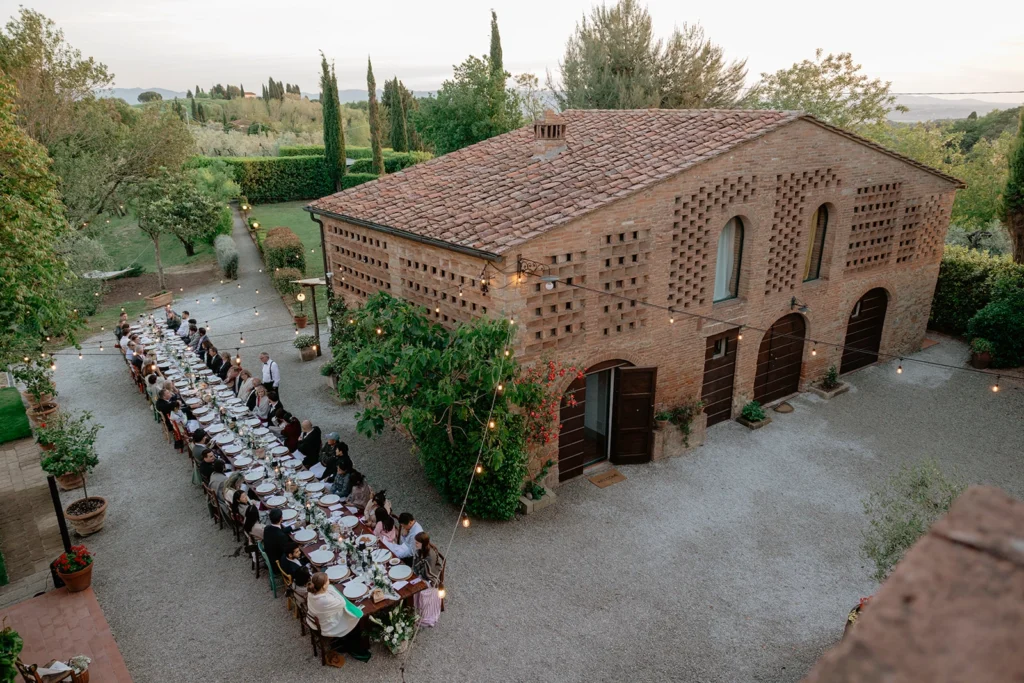
The venue itself is built around a central courtyard in warm terracotta brick, with arched doorways, climbing plants, and the particular character of a working agricultural property that has been restored with care rather than renovated into something generic. The buildings are honest in a way that many Tuscan venues are not. You can feel the age and the use of the place, and that history gives every photograph taken here a weight and authenticity that purpose-built venues cannot replicate.
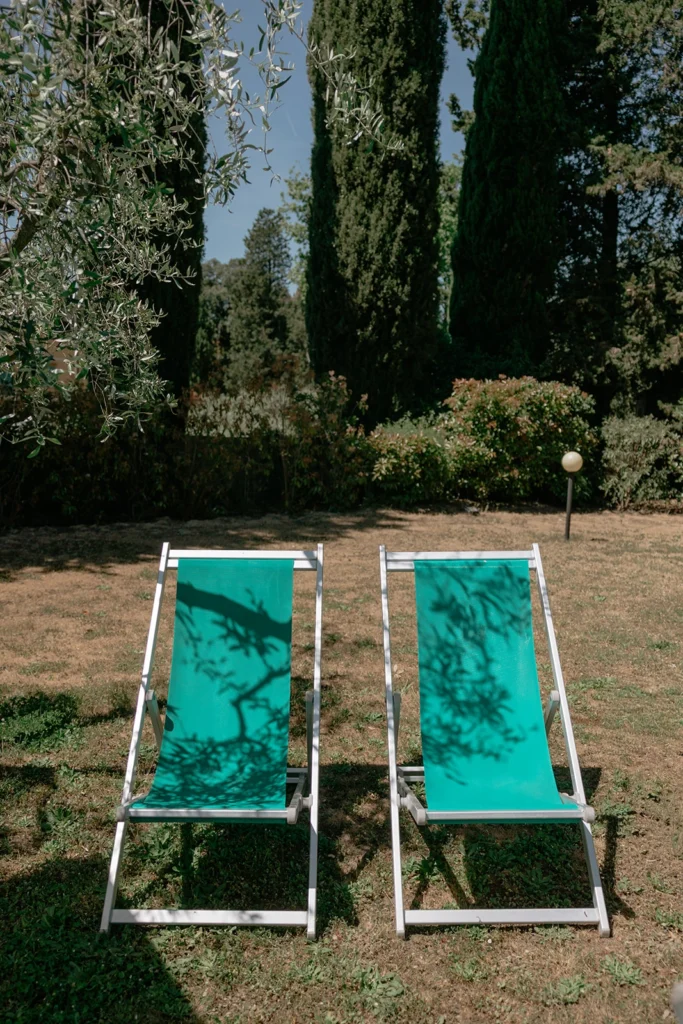
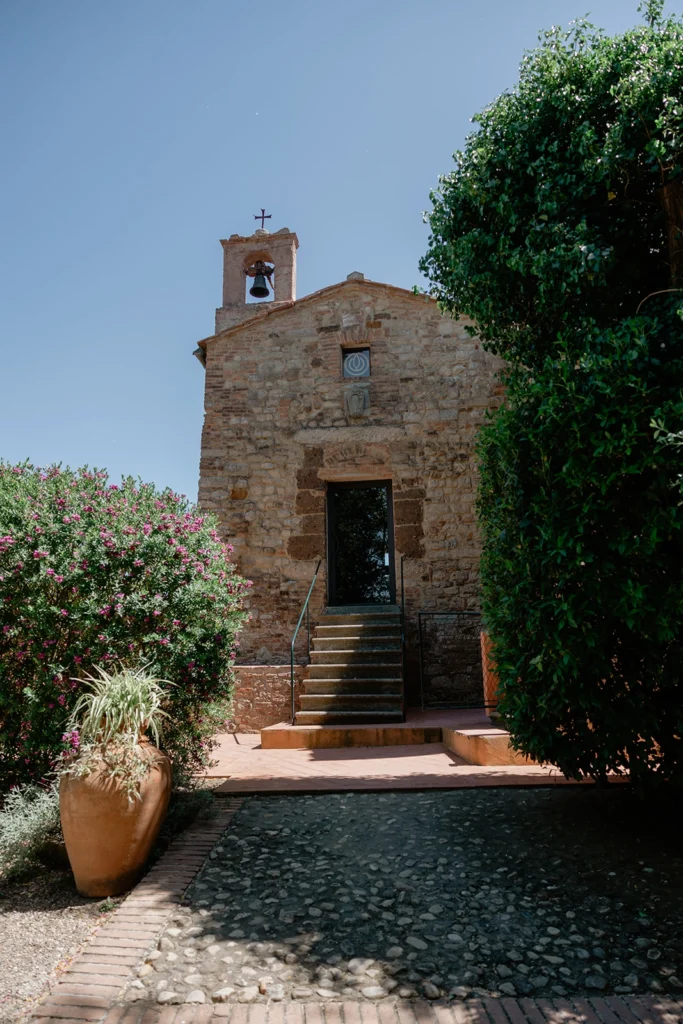
The accommodation on site allows the wedding party to stay at the venue, which transforms the experience of the day. When guests wake up at Podere San Giorgio on the morning of the wedding, the preparing, the waiting, and the celebrating all happen in the same place. The photographs that result from this continuity, the morning light through the windows of the rooms, the informal moments between the ceremony and dinner, the last guests still at the table as the stars appear, have an intimacy that only comes from a venue where everyone lives together for the day.
The Ceremony Space Under the Old Tree
The ceremony at the wedding I photographed took place under a large tree at the edge of the property, with the Tuscan hills stretching away behind the couple. There is something about this choice that feels completely right for Podere San Giorgio. A formal ceremony space would have been incongruous here. The tree, the grass, the hills, the sky are the ceremony space that the venue was always pointing toward.
Photographically, this is one of the most beautiful ceremony settings I have worked in. The tree provides natural shade and dappled light that is gentle and even without being flat. The hills behind create depth and context in every wide shot. And because the space is open rather than structured, the guests gather around the couple naturally, creating a sense of community and presence that more formal ceremony arrangements rarely achieve.
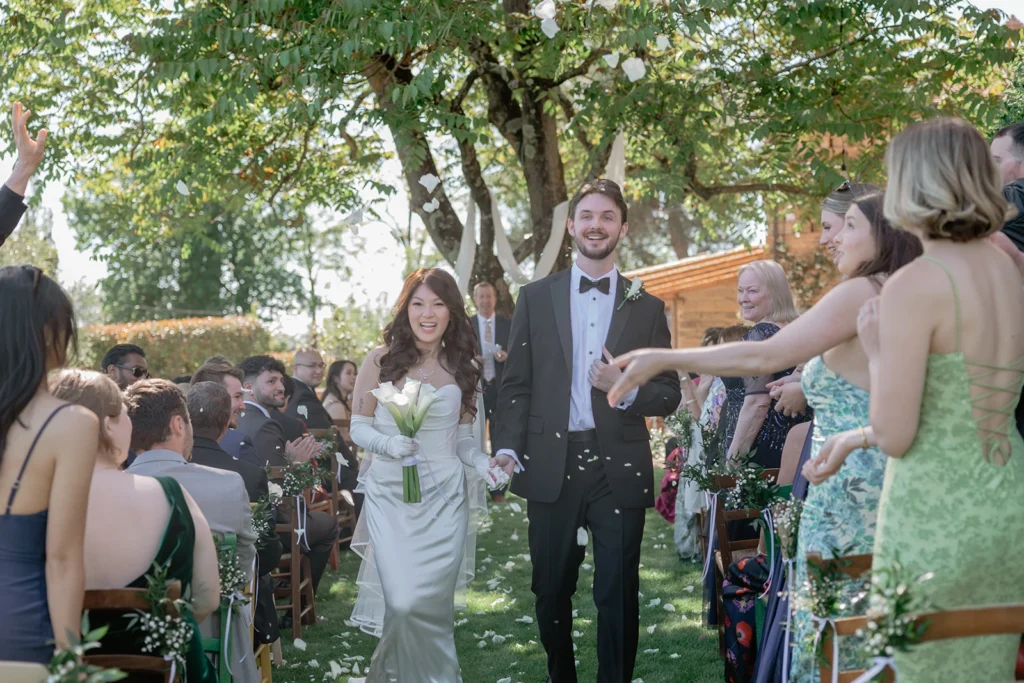
One detail I particularly noticed: in the minutes before the ceremony began, when the guests were still finding their places and the couple had not yet appeared, the light on the tree and the grass below had a quality of suspended stillness that I find only at outdoor ceremonies in late afternoon. I always try to make a few frames in this window, before the movement of the ceremony begins, because the atmosphere of those quiet minutes before everything starts is something worth preserving.
The light on the hills in the late afternoon, when the sun is dropping toward the west and the landscape takes on the amber quality that Tuscany is known for, turns this view into something extraordinary. The cypress trees on the ridgeline, the olive groves in the middle distance, the shadows lengthening across the fields are the Tuscany that couples come from the other side of the world to find, and at Podere San Giorgio it is simply there, outside, waiting.
Wedding Dinner at Podere San Giorgio: The Long Outdoor Table
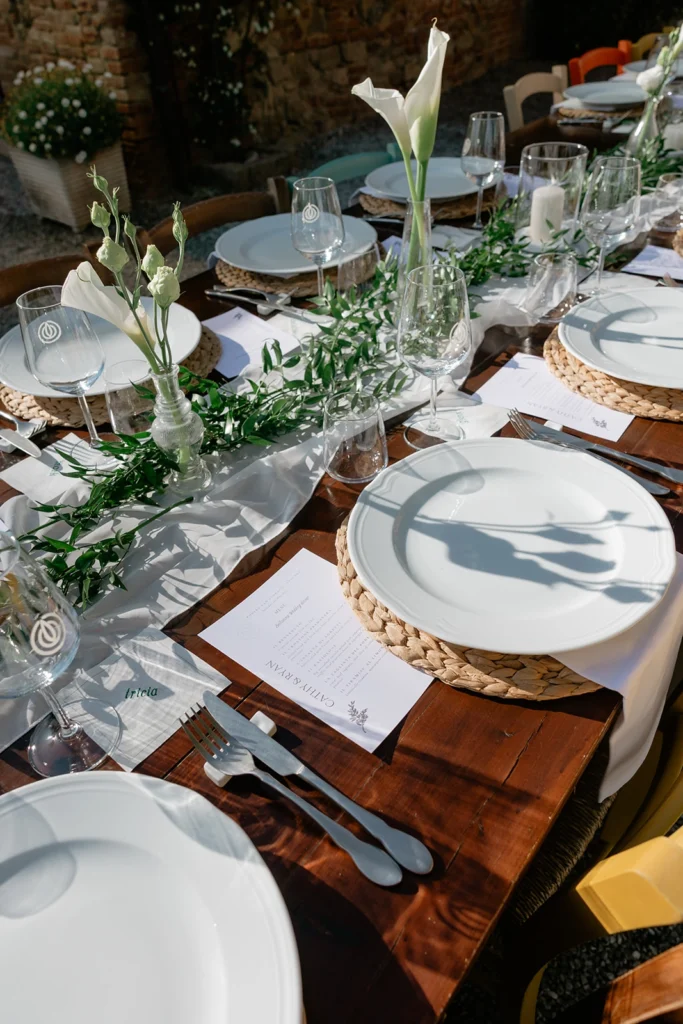
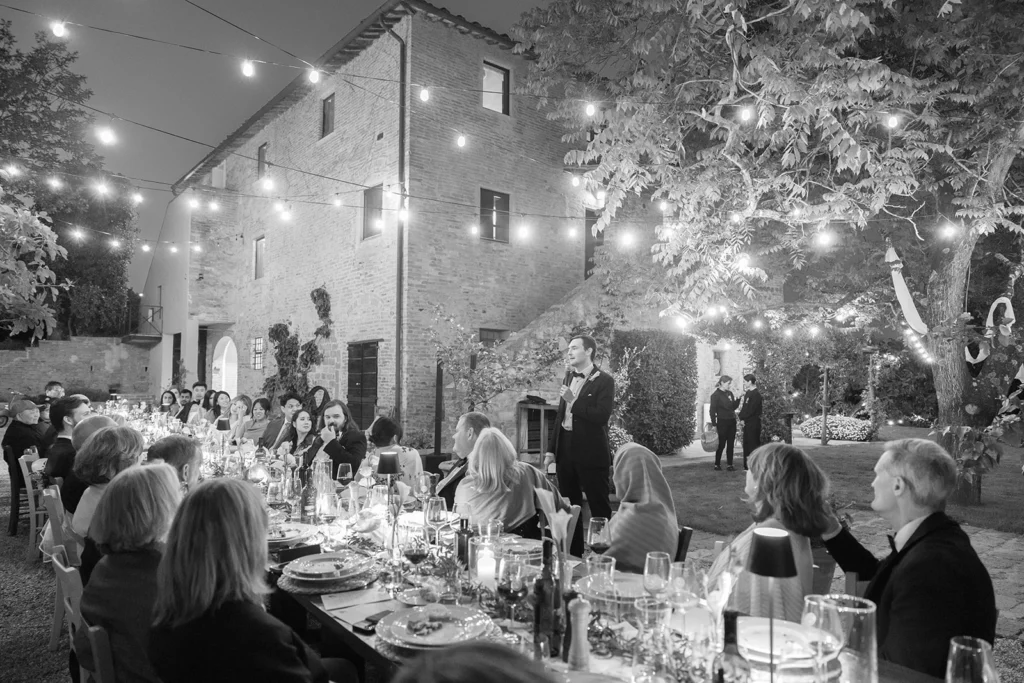
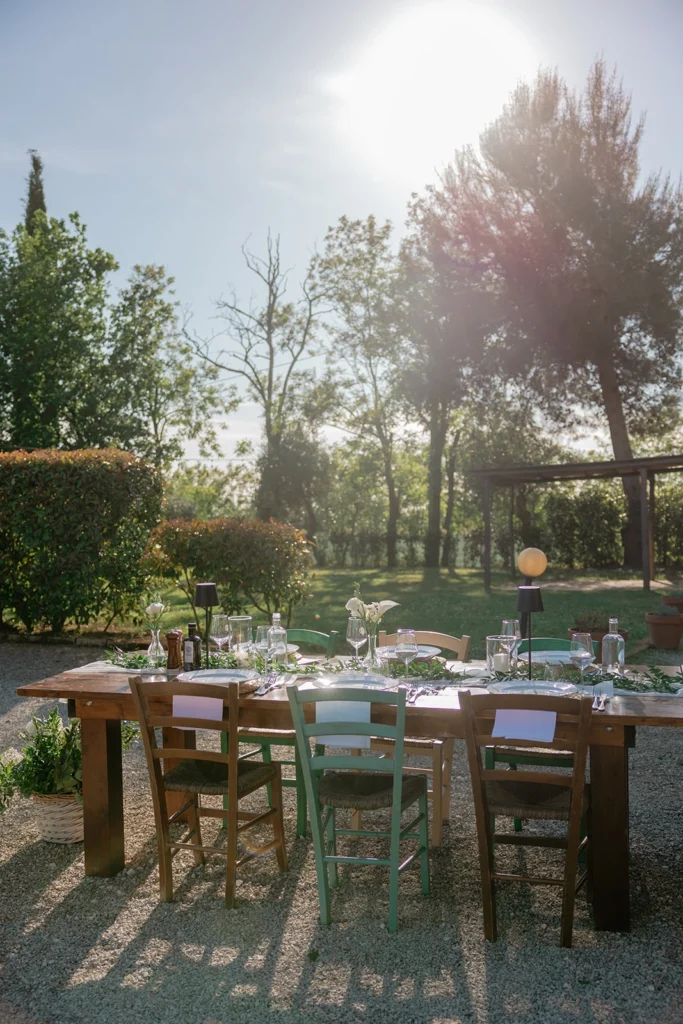
The outdoor dinner at Podere San Giorgio is one of the defining experiences of a wedding here. A single long table runs the length of the courtyard, with the brick building on one side and the garden opening toward the hills on the other. The mismatched coloured chairs in yellow, green, red and ochre give the table an informal warmth that is immediately and specifically Italian. The olive branch runners, the white linen, the portable lamps casting pools of warm light as the evening comes in, all of this creates a composition that is beautiful before anyone sits down.
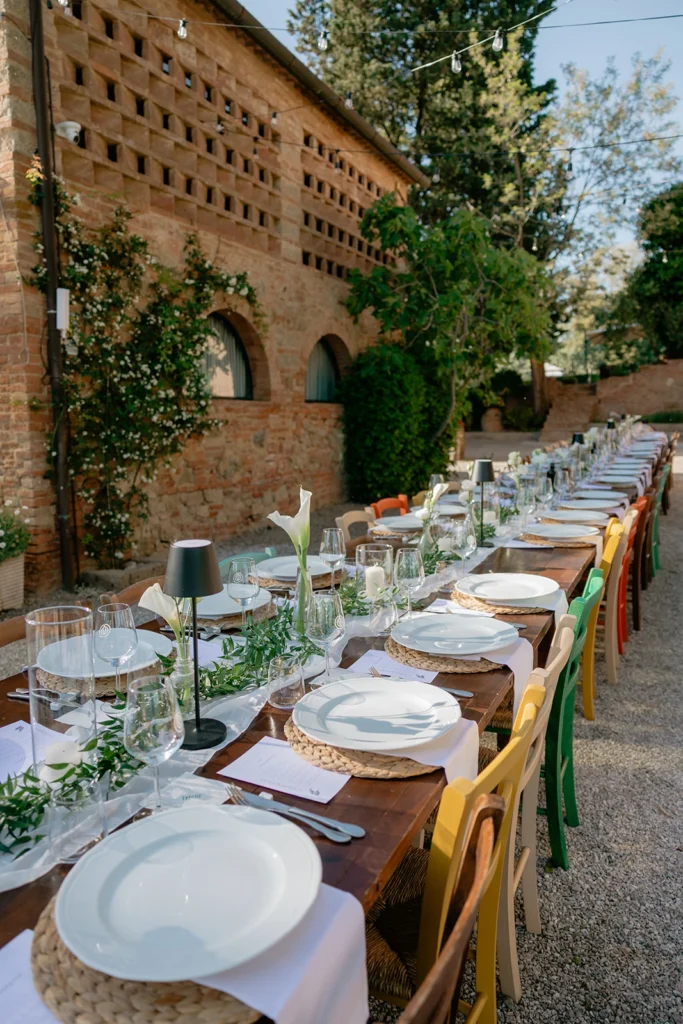
What I find most interesting about photographing a long outdoor table like this is the aerial perspective. From the upper level of the building, looking down along the length of the table with the guests gathered, the fairy lights strung above and the Tuscan landscape visible beyond the garden wall, the image tells the whole story of the day in a single frame. The intimacy of the conversation, the scale of the celebration, the beauty of the setting are all present simultaneously.
The evening light at Podere San Giorgio is particularly beautiful. Because the courtyard is oriented toward the west, it catches the last warm light of the day directly. As the sun sets behind the hills, the quality of the light softens progressively, first golden, then amber, then the blue of dusk that makes candlelit tables glow. I try to keep the couple for portraits during this transition, when the sky behind the hills is still luminous and the landscape is at its most evocative.
One thing worth mentioning about the dinner photography specifically: the coloured chairs create natural leading lines and colour accents that make wide shots of the table immediately more interesting than a standard white-chair setup. I found myself using the yellow and green chairs in the foreground of detail shots in a way that added warmth and character to images that might otherwise have felt generic. It is a small thing, but it is the kind of detail that makes a real difference across a full wedding gallery.
Photography at Podere San Giorgio: Spaces, Light and What to Expect
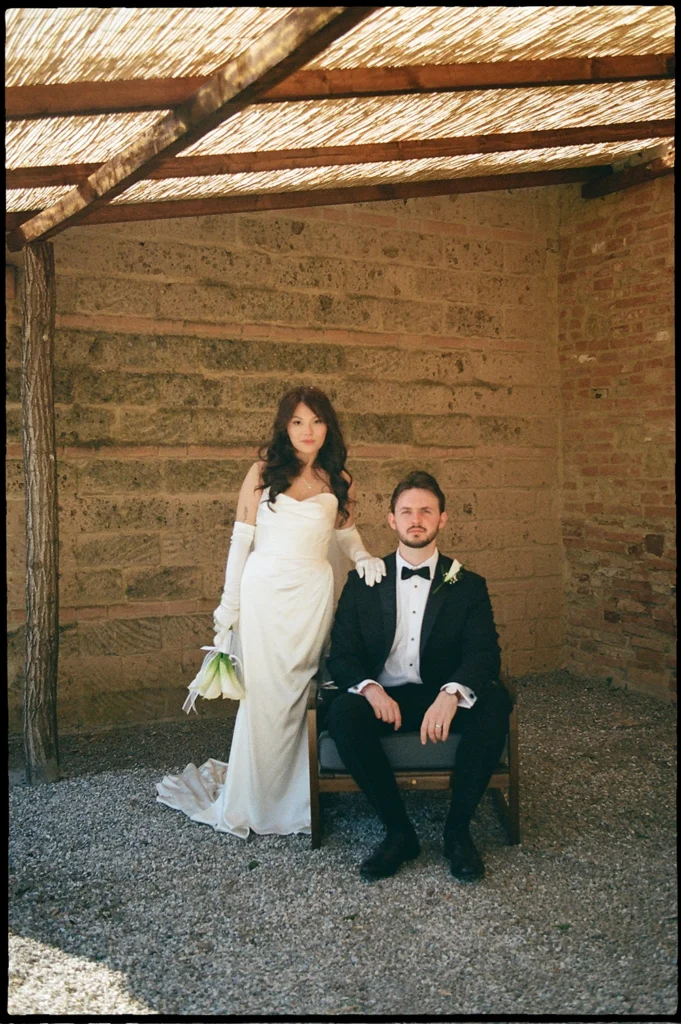
The pergola. There is a covered structure at the venue with stone walls, a wooden frame and a cane roof that creates a quality of filtered light that is unlike anything in the open courtyard. The light comes through the gaps in the cane in diagonal shafts that fall on the gravel floor and the pale stone of the walls. It is a naturally constructed studio, and the portraits I made there have a graphic quality and a warmth that I did not expect from an outdoor structure. I would use it again at every opportunity. It was also one of the spaces where I chose to shoot on film, the diffused, directional light through the cane roof is exactly the kind of condition where analogue responds in a way that digital cannot fully replicate, adding grain and warmth that suit the age and texture of the building perfectly. I would use it again at every opportunity.
The getting ready rooms. The interiors at Podere San Giorgio have terracotta floors, wooden furniture, and windows that face the morning light. The getting ready I photographed had a mother adjusting her daughter’s necklace at the window, the kind of moment that happens in two seconds and that, if you are in the right position with the right light, produces one of the best images of the day. The rooms are not large, but the light in them is excellent and the warm tones of the interior complement every skin tone I have seen in them.
The arched doorways. The brick arches along the courtyard wall are one of the most versatile photography elements at the venue. Used as natural frames for couple portraits, they provide depth and context without competing with the subjects. The climbing plants growing around them add texture and a quality of abundance that feels genuinely seasonal and genuinely Tuscan. I used these both in direct sunlight and in the shade, and they work equally well in both conditions.
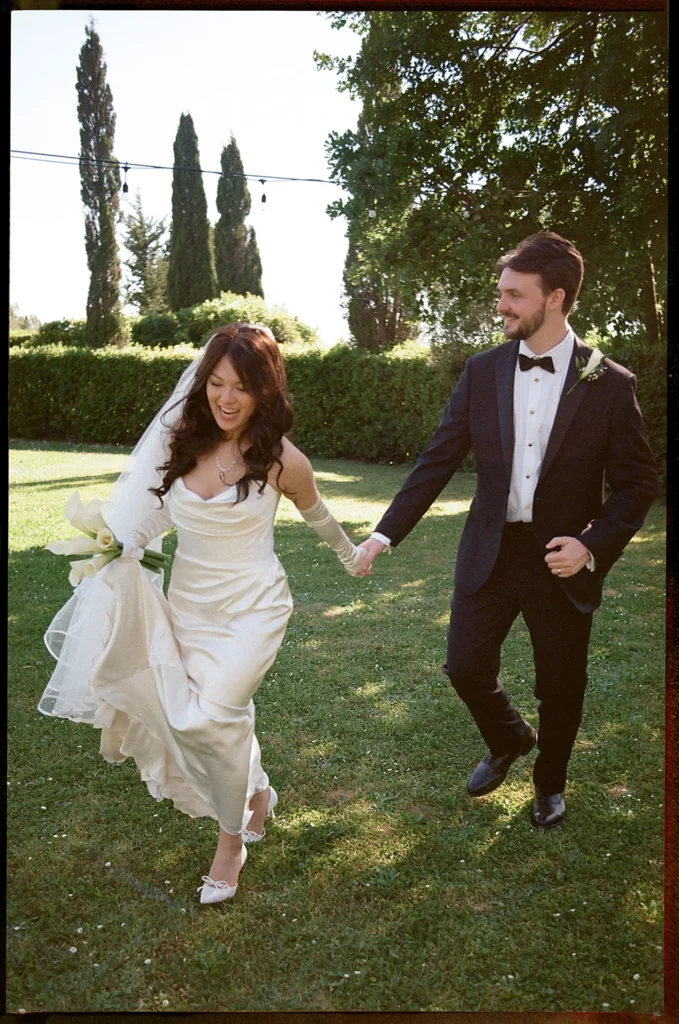
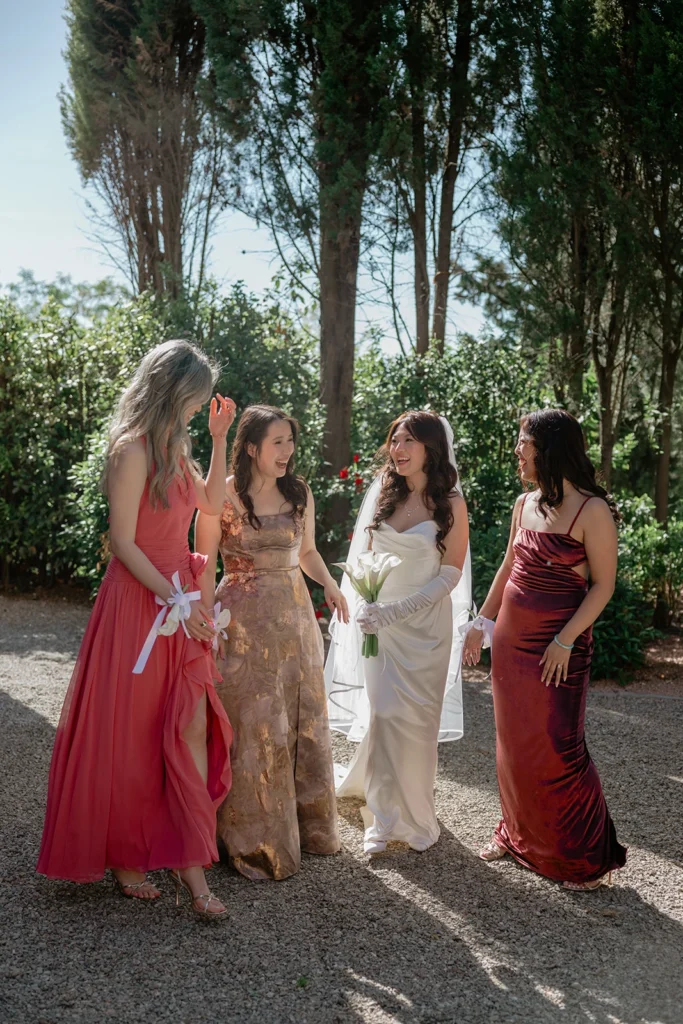
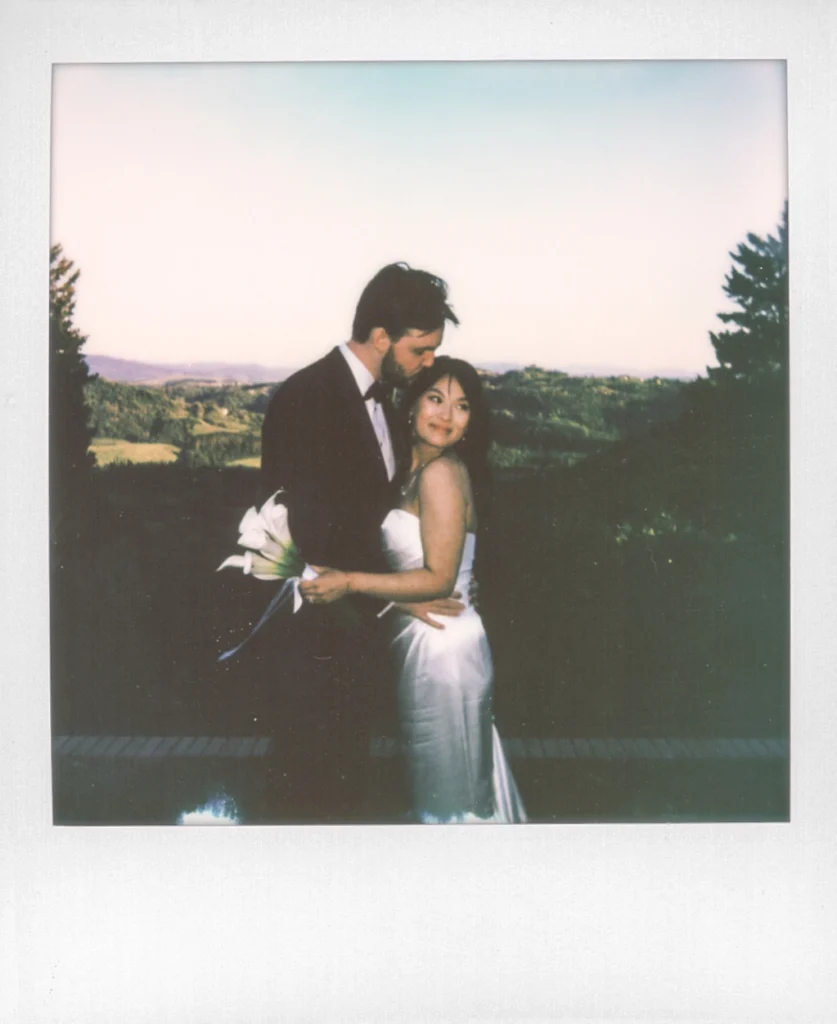
The lawn above the courtyard. The flat lawn above the main building, with the panoramic view of the hills behind it, is the most immediately cinematic space at the venue. The couple portraits I made here in the last thirty minutes of light, with the hills green and layered behind them, the wind in the veil, the particular quality of the low autumn sun, are among the best I have made at any Tuscan venue. The view is genuinely extraordinary and requires no staging, no props, no intervention. You simply put two people there and wait for the light to do what it does.
The boundary wall and the garden. There is a section of the property where the garden meets the boundary wall, with the landscape visible beyond and the late afternoon light falling across the stone. This is a location that many photographers would walk past without noticing, but it offers a contained, intimate composition with the Tuscan countryside as backdrop that feels different from the more open lawn above. I use spaces like this for the quieter, more contemplative portraits, the ones where the couple is simply standing together, not performing for the camera, and the surroundings carry the weight of the image.
Planning Your Wedding at Podere San Giorgio: Practical Information
Palaia is approximately forty minutes from Pisa airport and an hour from Florence, which makes it genuinely accessible for international guests without being on the well-worn tourist circuit. The town itself is worth exploring, a small medieval hilltop village with a church, a piazza, and the particular stillness of the Tuscan interior that the coast and the major cities have lost.
The venue works best for weddings of between thirty and eighty guests, intimate enough to feel personal, large enough to fill the courtyard and the long table. The self-contained nature of the property, with accommodation on site, makes it particularly well suited to destination weddings where guests are travelling from abroad and benefit from arriving somewhere they can stay and settle.
The best season for Podere San Giorgio is September and October, when the Tuscan light is at its most beautiful and the landscape carries the colours of the harvest. The vineyards in the surrounding hills turn golden and red, the days are warm without the intensity of summer, and the evenings are cool enough for a long outdoor dinner without anyone being uncomfortable. My experience here was in this season and the conditions were extraordinary. Spring, from April through early June, is an equally strong choice, the hills are green, the wildflowers are out, and the light has a clarity that summer haze obscures.
For couples interested in the broader context of wedding photography in Tuscany, my complete guide to getting married in Tuscany covers the region in detail. For an understanding of how costs work across Tuscan venues, my Tuscany wedding photography pricing guide is the most honest breakdown I can offer.
Frequently Asked Questions
Where exactly is Podere San Giorgio?
Podere San Giorgio is in Palaia, a small hilltop town in the Pisan hills of Tuscany, between Volterra and the Tyrrhenian coast. It is approximately forty minutes from Pisa airport and one hour from Florence, making it easily accessible for international guests without being in the most tourist-heavy part of the region. You can find full details and contact information on the venue’s official website.
How many guests can Podere San Giorgio accommodate?
The venue works best for between thirty and eighty guests for an outdoor ceremony and dinner. The long courtyard table and the open ceremony space under the tree are designed for this scale, intimate enough to feel personal and large enough to feel like a genuine celebration.
What is the best time of year for a wedding at Podere San Giorgio?
September and October are the most beautiful months photographically, when the harvest light turns the surrounding hills amber and the evenings are cool enough for long outdoor dinners. April and May are equally strong, with the hills green and the light clear before summer haze arrives. For a complete guide to how seasons affect wedding photography across Tuscany, my guide to the best seasons for wedding photography in Italy covers the main variables.
Is Podere San Giorgio suitable for destination weddings with international guests?
Yes, and the self-contained nature of the venue makes it particularly well suited to this. When guests travel from abroad for a wedding, having accommodation on site transforms the experience, with the celebrating, the preparing, and the resting all happening in the same beautiful place. The accessibility from Pisa airport makes logistics straightforward for guests arriving from northern Europe or the United States.
What makes Podere San Giorgio different from other Tuscan venues?
The combination of the authentic agricultural character of the buildings, the extraordinary panoramic view of the Pisan hills, and the self-contained intimacy of the property gives Podere San Giorgio a quality that more famous and more formal Tuscan venues often lack. It feels like a real place rather than a curated experience, and that honesty comes through in the photographs.
Browse my portfolio and real weddings to see how I work across Tuscany, then reach out if what you see feels right.
Written by Cristiana Fiorini, Italian destination wedding photographer, working across Italy, from the Pisan hills and Tuscany to the Amalfi Coast, Sicily, Lake Como and Venice.


