
Lake Garda is the largest lake in Italy and one of the most varied. Where Lake Como is narrow and dramatic, defined by steep mountains and deep water, Garda is wider, more open, and more Mediterranean in character toward the south. The olive groves, the lemon houses, the pale limestone cliffs above Malcesine, the broad southern basin around Sirmione, these are landscapes that feel genuinely different from one end of the lake to the other, and they offer a range of photographic possibilities that few other locations in northern Italy can match.
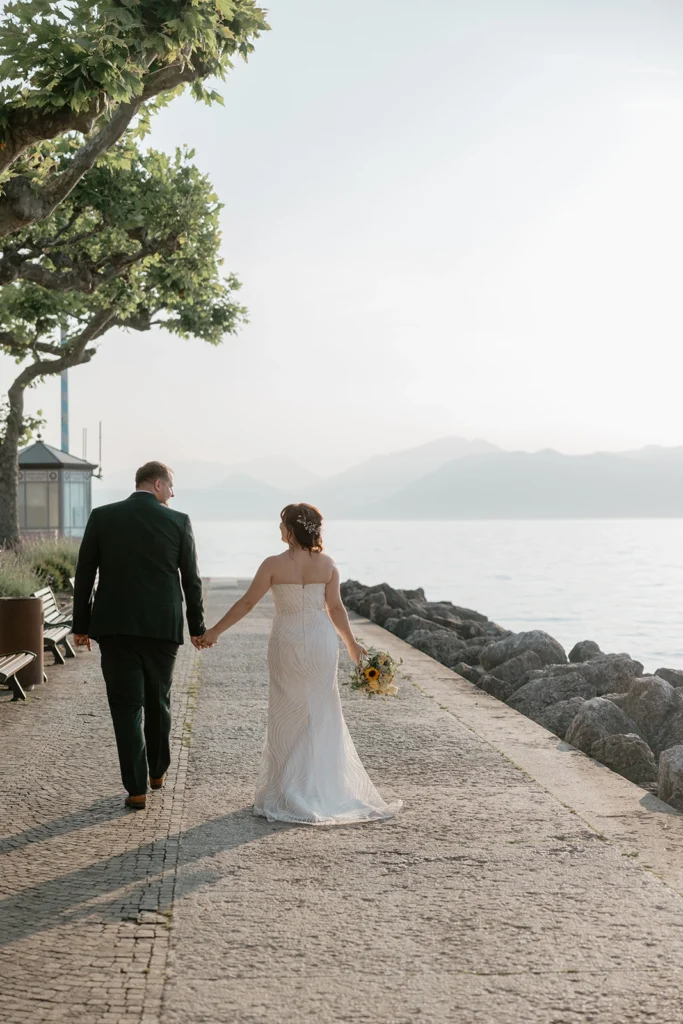
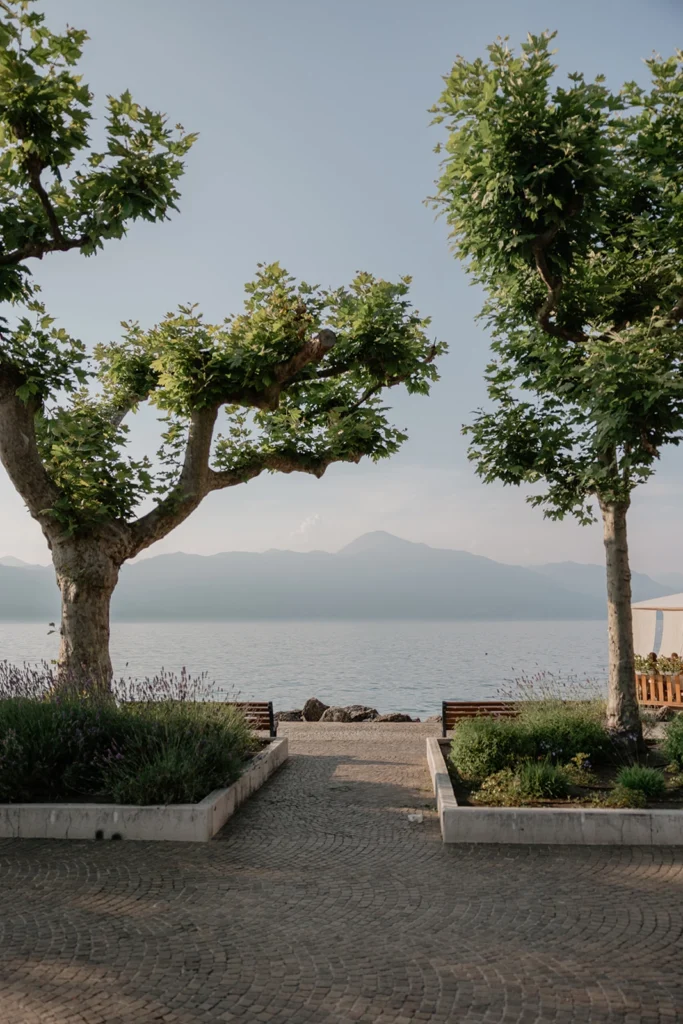
I have photographed weddings at Lake Garda and what strikes me consistently is the quality of the light on the water in the early morning. The lake is large enough that the horizon feels genuinely open, and the way the light changes across the surface throughout the day gives the photographs a depth and atmosphere that smaller lakes cannot produce. The western shore catches the afternoon light directly, while the eastern shore is in gentle shadow, which means the two sides of the lake offer completely different photographic conditions at the same time of day.
This guide covers what I have learned about photographing at Lake Garda, the zones, the light, the best timing, and what couples should understand before choosing this extraordinary lake as the setting for their wedding. If you are still deciding between Italian lake destinations, my Lake Como photographer guide covers the differences in detail and may help you choose the right lake for your vision.


Lake Garda as a Photography Location: What Makes It Different
Lake Garda’s geography creates a microclimate that is unlike anywhere else in northern Italy. The southern basin, around Sirmione and Desenzano, is broad and open with a gentle, almost maritime atmosphere. The central lake, around Gardone Riviera and Salò on the western shore and Torri del Benaco on the east, is narrower and more dramatic, with the mountains beginning to close in. The northern lake, around Riva del Garda and Malcesine, is genuinely Alpine, steep cliffs, turquoise water, and a quality of light that is sharper and clearer than anything in the south.
This variety is Lake Garda’s greatest photographic asset. A couple married at Sirmione experiences a completely different lake from a couple married at Malcesine, even though they are on the same body of water. Understanding which part of the lake best suits your vision is the first and most important decision in planning photography here.
The light at Lake Garda is generally excellent for photography. The lake’s orientation, running roughly north to south, means that the western shore catches late afternoon and evening light directly, while the eastern shore receives morning light. For golden hour photography, the western shore between Gardone Riviera and Limone sul Garda is consistently the most rewarding part of the lake. The light there in the hour before sunset turns the water deep gold and the pale stone of the lakeside villages warm amber.
The Best Zones at Lake Garda for Wedding Photography
Sirmione
Sirmione occupies a narrow peninsula at the southern end of the lake and is one of the most immediately recognisable locations on the Garda. The Scaligero Castle, a 13th-century fortress that rises directly from the water at the entrance to the old town, is the iconic image of Sirmione and one of the most photographically compelling medieval structures in northern Italy. The old town beyond the castle, with its narrow streets, Roman ruins, and views across the broad southern basin, offers a richness of visual material that rewards a long photography session.
For couples choosing Sirmione, the early morning is essential. The town is extremely popular with day visitors and fills quickly after nine. Before eight, the streets are quiet, the light is soft and directional, and the Scaligero Castle reflected in the still water of the harbour produces images that are impossible to replicate later in the day. The Grotte di Catullo, the Roman villa ruins at the tip of the peninsula, offer an extraordinary archaeological setting for couple portraits: elevated, ancient, and with views across the full southern basin of the lake.
Gardone Riviera
Gardone Riviera, on the western shore of the central lake, is the most elegant and historically layered part of Garda. The town was a celebrated resort for European aristocracy and intellectuals in the late 19th and early 20th centuries, and the architecture reflects this history: grand hotels, botanical gardens, Liberty-style villas, and the extraordinary Vittoriale degli Italiani, the estate of the poet Gabriele D’Annunzio, which combines a neoclassical villa, an amphitheatre, a warship, and extensive gardens in a composition that is unlike anything else in Italy.
The Vittoriale is one of the most interesting photography locations on the lake, not conventionally romantic, but visually extraordinary and completely unlike the typical wedding backdrop. The botanical garden at Gardone, one of the oldest in Italy, offers a quieter and more intimate alternative with extraordinary planting that photographs beautifully in the morning light.
The western shore between Gardone and Limone sul Garda catches the best sunset light on the lake. The combination of the water, the mountains across the lake, and the lemon terraces, the limonaie that are unique to this part of Garda, gives the late afternoon photography here a warmth and distinctiveness that is hard to find anywhere else in northern Italy.
Malcesine
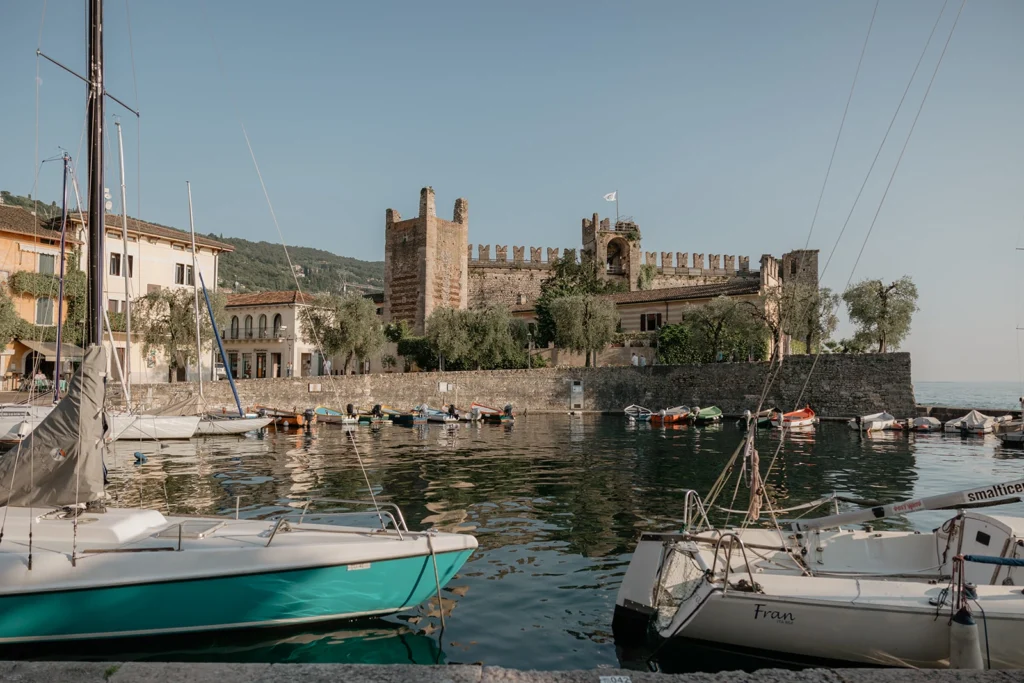
Malcesine, on the eastern shore below the Monte Baldo massif, is the most dramatic and Alpine of the major lake towns. The Castello Scaligero sits directly above the harbour on a rocky promontory, and the combination of the castle, the medieval town below, and the turquoise water of the lake in the foreground is one of the most striking compositions at the entire lake. The cable car to Monte Baldo above the town gives access to a completely different landscape, open Alpine meadows, with the lake visible far below and the Alps stretching in every direction.
For couples who want images that combine lake and mountain in a single frame, Malcesine is the most compelling location at Lake Garda. The light on the eastern shore is at its best in the morning, when the sun comes over the mountains and catches the water from the east. By afternoon the eastern shore is in shadow from Monte Baldo, which changes the character of the photography entirely: cooler, more atmospheric, but less warm.
Limone sul Garda
Limone sul Garda, north of Gardone on the western shore, is one of the most characteristically Mediterranean towns on the lake. The limonaie, the historic lemon terraces with their stone columns and wooden pergolas, are unique to this stretch of coast and offer a visual texture that has no equivalent anywhere else in northern Italy. The town is compact and the streets are extremely narrow, which makes it challenging logistically but rewarding photographically, every corner offers something interesting.
The lemon terraces in the afternoon light are one of my favourite details to photograph at Lake Garda. The interplay of the stone columns, the citrus leaves, and the lake visible through the gaps in the structure creates a layered composition that feels genuinely original.
Riva del Garda
Riva del Garda, at the northern tip of the lake where it narrows between sheer Alpine cliffs, has a completely different character from the southern and central lake. The town sits at the foot of cliffs that rise almost vertically from the water’s edge, and the scale of the landscape here is genuinely dramatic. The Torre Apponale, the medieval tower in the central piazza, and the lakefront with its views south down the full length of the lake offer strong compositional material.
The northern lake also benefits from the Ora, the afternoon wind that comes up the lake from the south and creates movement on the water that adds energy and texture to photographs. For couples who want something more dramatic and Alpine than the softer southern lake, Riva del Garda offers a completely different version of Lake Garda that is worth serious consideration.
Practical Advice for Planning Wedding Photography at Lake Garda
The ferry. Lake Garda has an excellent ferry service connecting the major towns on both shores. For couples with guests arriving from different parts of the lake, or for photographers needing to move between locations, the ferry is often faster and more practical than driving the lakeside road, which can be extremely congested in summer. Building ferry transfers into your photography timeline adds a cinematic dimension to the day, the lake from the water is genuinely different from the lake from the shore.
The wind. The Ora afternoon wind is constant at Lake Garda, particularly in the northern and central lake. It affects how fabric moves in portraits, how hair behaves, and how candles perform at outdoor dinners. It is not a problem, it adds energy and movement to photography, but it is worth discussing with your photographer so the timeline and positioning of outdoor elements accounts for it.
The crowds. Lake Garda is the most visited lake in Italy, receiving approximately thirty million visitors a year. In July and August the major towns Sirmione, Malcesine, Limone are very crowded during the day. The same strategy as everywhere else applies: early morning and late evening photography, and working with a photographer who knows which locations offer privacy at which times.
Season. May, June, September and October are the best months for wedding photography at Lake Garda. The light is beautiful, the lake is at its most inviting, and the crowds are manageable. April offers the lake at its quietest and most intimate, with the olive trees and lemon terraces in new leaf. For a complete guide to how seasons affect wedding photography across Italy, my guide to the best seasons for wedding photography in Italy covers the main variables clearly.
Frequently Asked Questions
What is the best part of Lake Garda for wedding photography?
The western shore between Gardone Riviera and Limone sul Garda offers the best sunset light on the lake and the most consistently beautiful photography conditions. Sirmione is the most iconic location for a recognisably Lake Garda aesthetic. Malcesine offers the most dramatic combination of lake and Alpine landscape. The right choice depends on your vision, softer and more Mediterranean in the south, more dramatic and Alpine in the north.
What are the best venues for weddings at Lake Garda?
Villa Feltrinelli at Gargnano is widely considered one of the finest wedding venues on the lake, a Liberty-style villa directly on the water with extraordinary interiors and grounds. Lefay Resort above Gargnano offers a more contemporary setting with panoramic lake views. Grand Hotel Fasano at Gardone Riviera combines historic architecture with direct lake access. Each has its own photographic character and logistical requirements.
How does Lake Garda compare to Lake Como for wedding photography?
Lake Como is narrower, more dramatic, and more immediately cinematic, the steep mountains, the deep water, the famous villas. Lake Garda is wider, more varied, and more Mediterranean in the south. Como tends to produce more classically cinematic images. Garda offers more variety across its length and a warmer, more open atmosphere. For couples who want the iconic Italian lake aesthetic, Como is usually the first choice. For couples who want something slightly less expected and more varied, Garda is a compelling alternative. My Lake Como photographer guide covers the specific photography considerations for Como in detail.
Is Lake Garda good for elopements?
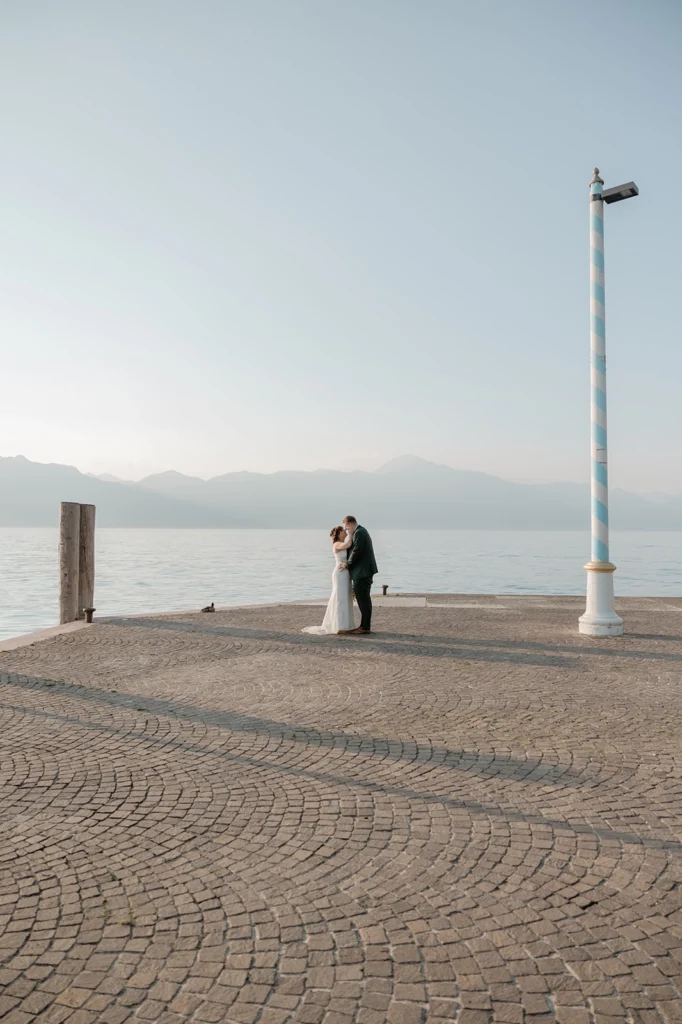
Yes, particularly the quieter towns on the eastern shore like Torri del Benaco and Brenzone, which offer extraordinary lake scenery without the crowds of Sirmione or Malcesine. The northern lake around Riva del Garda and Torbole also works well for intimate elopements, with a wilder and more Alpine atmosphere. For a guide to elopements in Italy more broadly, my guide to getting married in Italy covers the legal and practical requirements for both civil and symbolic ceremonies.
What time of day is best for photography at Lake Garda?
The hour after sunrise and the hour before sunset are the two golden windows at Lake Garda, as at most Italian locations. The western shore is at its best in the late afternoon and evening. The eastern shore is at its best in the morning. For a detailed guide to how to build a photography timeline around these windows, my guide to creating a seamless wedding day timeline covers the main principles.
Planning a wedding at Lake Garda?
Browse my portfolio and real weddings to see how I work across northern Italy, then reach out if what you see feels right.
Written by Cristiana Fiorini, destination wedding photographer based in Rome, working across Italy — from Lake Garda and Lake Como to Tuscany, the Amalfi Coast, Sicily and Venice.


