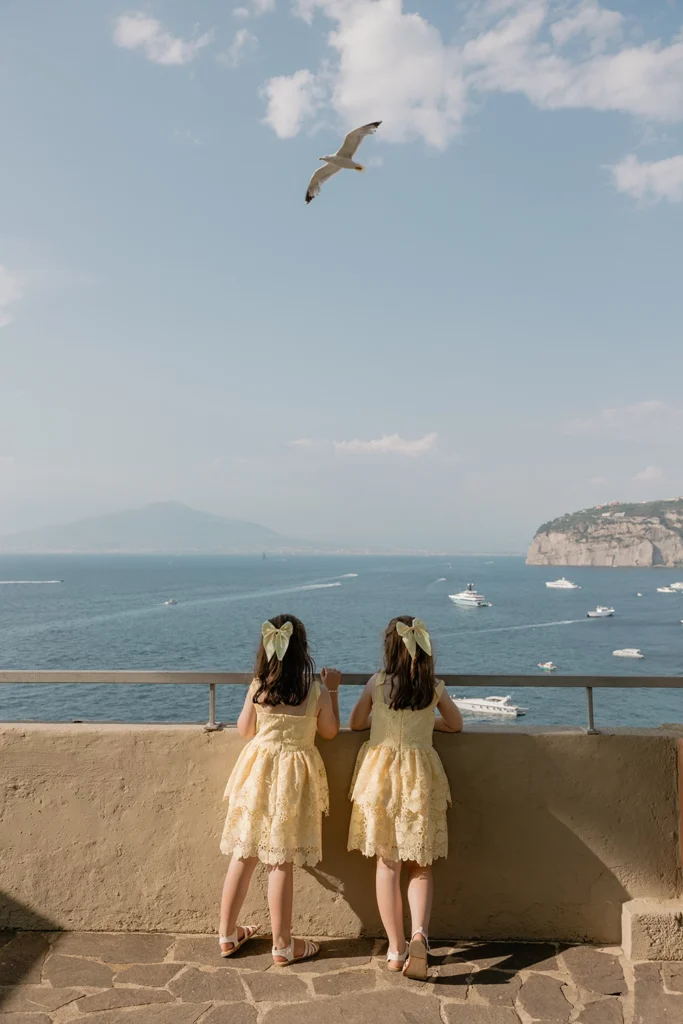
There are places that feel like dreams even when you’re standing in the middle of them and the Amalfi Coast is one of those rare places. For couples coming from abroad to get married in Italy, this stretch of coastline offers more than just beauty. It offers a feeling, a rhythm, and a backdrop that turns a celebration into something extraordinary. As a destination wedding photographer, I’ve walked these cliffside paths with brides barefoot in silk, witnessed vows whispered under lemon trees, and followed couples as they sailed away from Positano with wind-tangled hair and laughter echoing against the sea.
Imagine waking up in a centuries-old villa perched high above the coastline, where every balcony seems to float above the sea and where breakfast is served with the scent of jasmine and espresso. Your wedding day begins slowly, just like life does here. There’s no rush. The light moves softly, gold brushing across terracotta rooftops, while the sounds of church bells and distant scooters blend with birdsong. This is not just a wedding location, it’s a world, and stepping into it feels like becoming part of an Italian love story written just for you.
Read also: Wedding at Nordelaia: destination editorial wedding in Piedmont

The Magic of the Amalfi Coast
What makes the Amalfi Coast different isn’t only its beauty, it’s the contrast. It’s where drama meets serenity. On one side, rugged cliffs fall steeply into the sea; on the other, soft gardens and delicate villas offer calm and elegance. This interplay of wild and refined creates a setting that feels cinematic, poetic, and deeply personal. Places like Positano and Ravello aren’t just locations. They are characters in your story, each with its own soul.
Positano is vibrant, bustling, joyful, a cascade of color where everything feels alive. Getting married here is like dancing with the village itself: narrow streets, limoncello stands, hidden churches with ancient bells. Ravello, by contrast, is ethereal and serene. Here, time feels suspended. Couples often choose to marry in places like Villa Cimbrone, where the view from the Infinity Terrace makes you believe the world ends in sky and sea.
There’s something incredibly intimate about exchanging vows on this coast. Whether you’re in Amalfi’s historic cathedral, on a boat at sunset, or in a quiet olive grove above Praiano, the setting does half the work of making your day unforgettable.

Read also: 7 Essential Sorrento Photographers tips for perfect memories
Planning a Destination Wedding from Abroad
Planning a wedding on the Amalfi Coast from another country might seem like a logistical puzzle, but in truth, it teaches you how to slow down and trust the process. Italians have a saying: *piano piano*, which means slowly, slowly. And it applies beautifully to wedding planning here.
The paperwork is real, and yes, depending on your country of origin, it can be complicated. There are Nulla Osta documents to acquire, Atto Notorios to sign at embassies, and sometimes the need for official translations. But these are the behind-the-scenes steps. Most couples choose to work with local planners who know exactly how to navigate these waters and can take care of it all for you. Their experience, language fluency, and connections with town halls and churches mean that you can focus on the emotional side of planning, rather than the administrative one.
You’ll find that many vendors are used to working with international clients. They’ll schedule virtual meetings, send video walkthroughs of venues, and even offer tastings and styling consultations remotely. With the right team, your wedding can come together seamlessly, no matter the distance.

Read also: Wedding at Palazzo Avino Ravello, Amalfi Coast Wedding Italy
When to Get Married on the Amalfi Coast
The best time to get married on the Amalfi Coast depends on your mood. Spring, with its blooming bougainvillea and fresh breezes, is ideal for intimate celebrations and long photo sessions among lemon groves. Summer brings vibrant energy and the full Italian experience, with crowded piazzas, lively beach clubs, and late dinners under the stars. Autumn casts a golden hue over everything, it’s romantic, quieter, and deeply atmospheric. Even winter has its charm: moody skies, cozy interiors, and the kind of solitude that turns an elopement into a deeply spiritual event.
Whatever the season, the light is everything here. As a photographer, I follow the light before I follow the couple. Morning sessions are quiet and blue-toned. Late afternoons are honey-warm. But golden hour on the Amalfi Coast, when the cliffs glow, the villages turn amber, and the sea mirrors the sky, is simply otherworldly. This is when real magic happens on camera.

Choosing the Perfect Location
Each village on the Amalfi Coast tells a different story. Positano is lively and iconic, with its colorful facades and beach clubs. Amalfi is historic, centered around its cathedral and rich maritime heritage. Ravello is a romantic hideaway, ideal for more intimate or refined celebrations. Praiano, Atrani, and Minori are lesser-known gems, slower-paced, with an authentic local charm.
Many couples choose to host multi-day celebrations, with the ceremony in one town and pre- or post-wedding events in another. This allows guests to explore more of the coastline and gives you a broader range of photo opportunities. From welcome dinners in lemon groves to farewell brunches overlooking the water, the Amalfi Coast becomes your private playground.
The Guest Experience
One of the most overlooked aspects of a destination wedding is the experience it creates not just for the couple, but for everyone involved. On the Amalfi Coast, your wedding becomes a shared adventure. Guests arrive days in advance. They take ferries between villages, sip Aperol on sunlit terraces, and marvel at the idea that this is where they get to celebrate your love. Many couples plan a welcome dinner the night before, usually a relaxed affair with fresh pasta, local wines, and laughter echoing through cobblestone streets. The day after the wedding, a brunch or boat tour gives guests one more memory to take home, and gives you more photos that feel spontaneous and joyful.
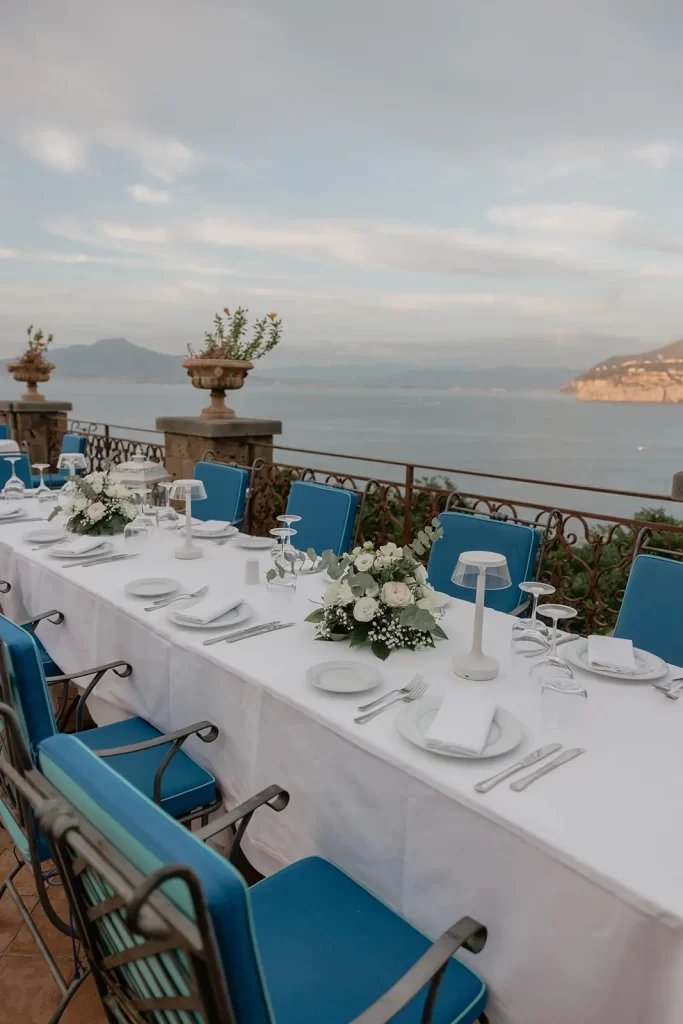
And then there’s the food. It’s not just catering here, it’s a feast. Weddings often feature multi-course meals filled with local specialties: lemon risotto, grilled fish, hand-rolled gnocchi, towering millefoglie cakes. Every flavor tells you exactly where you are. This is a region that celebrates through food, and your wedding becomes a reflection of that culture.
Read also: A dream wedding at Agriturismo La Mandriola
Photography and Storytelling
As a wedding photographer on the Amalfi Coast, my role is not simply technical. It’s relational, emotional, and intuitive. This is a place that brings out raw beauty, not just in the landscape, but in people. And photography here must be alive to that. It’s not about perfect poses or magazine-style glam; it’s about breath, movement, light, and truth.
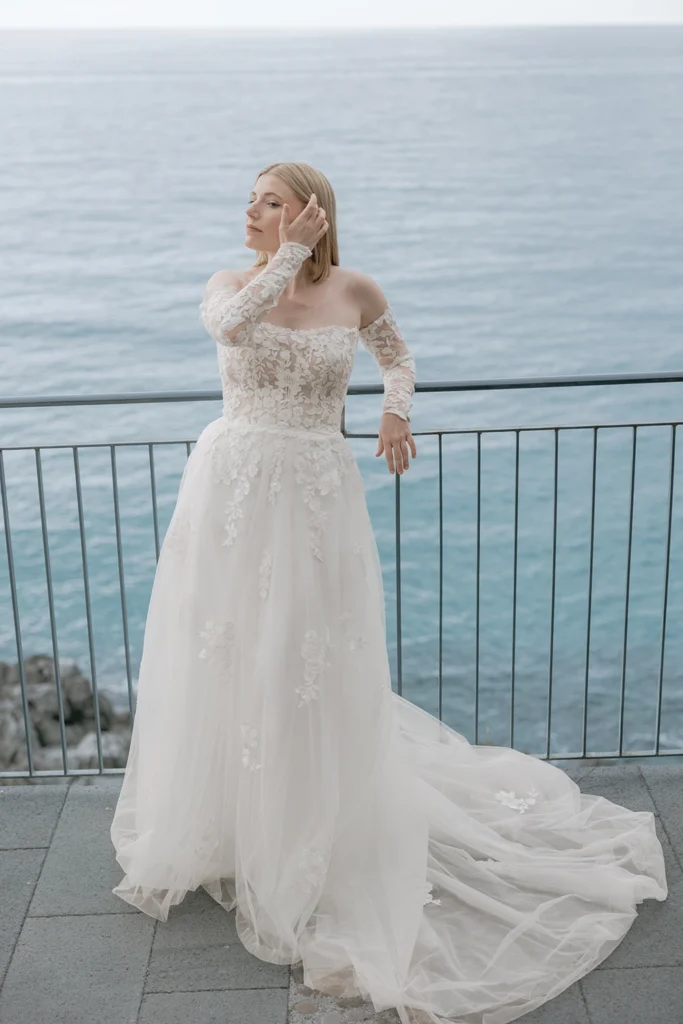
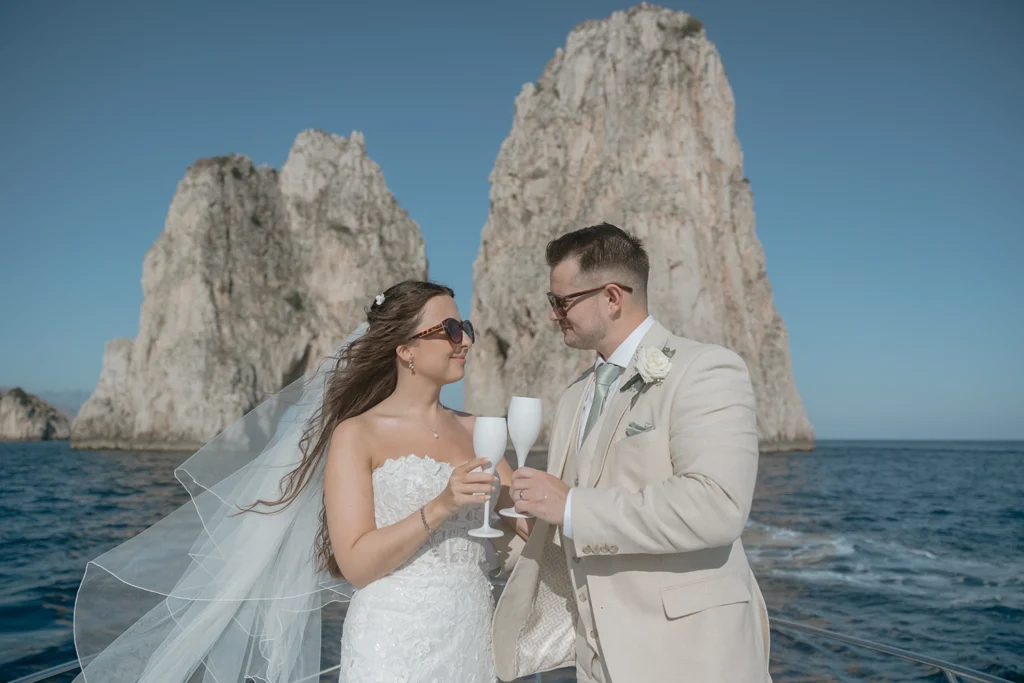
I begin by observing. The way your dress lifts in the sea breeze, the way the groom looks at you when you’re not aware of being watched, the way a grandmother smiles while holding a flute of prosecco. My camera is always looking for intimacy, but never intruding. The Amalfi Coast doesn’t need filters or elaborate compositions. Its character lies in its authenticity, and that’s exactly how I shoot: candidly, softly, reverently.
Light here is everything, it paints, it sculpts, it tells its own story. I follow it as it plays on stucco walls, dances through olive branches, and washes over stone steps warmed by centuries of sun. Golden hour is sacred. That brief time when the whole coast glows, when couples are lit in soft, diffused amber, is when some of the most unforgettable images are made. Not staged. Not forced. Just presence and place, captured in real time.
The result? Wedding albums that are not just collections of images, but visual narratives. They carry the heartbeat of the day. When you look back, you’ll remember not just how it looked, but how it felt.
Legal Considerations
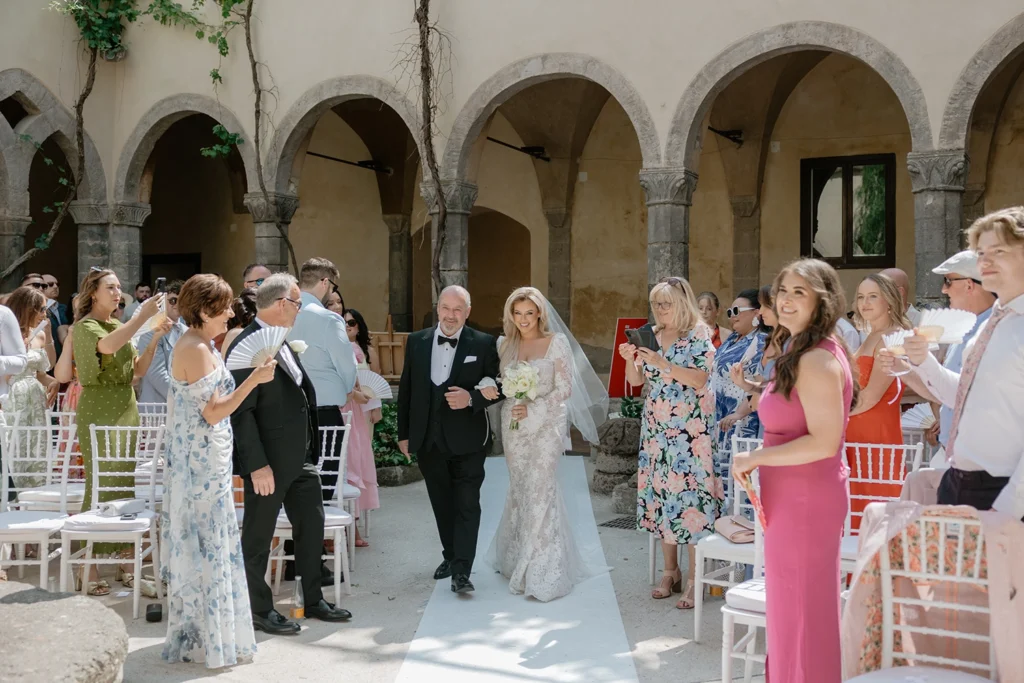
Let’s talk briefly about legal ceremonies. You can legally marry in Italy, but it requires time and attention. Civil ceremonies are often held in town halls with panoramic terraces, while religious weddings—especially Catholic—must comply with local diocesan rules. Symbolic ceremonies are increasingly popular for foreign couples who prefer a personal, flexible approach while handling legalities back home.
The paperwork process usually begins 6–9 months before the wedding date. You’ll need valid passports, birth certificates, certificates of no impediment, and official translations. Italian wedding planners are invaluable here; they know exactly how to move through bureaucracy so you don’t have to.
Final Thoughts
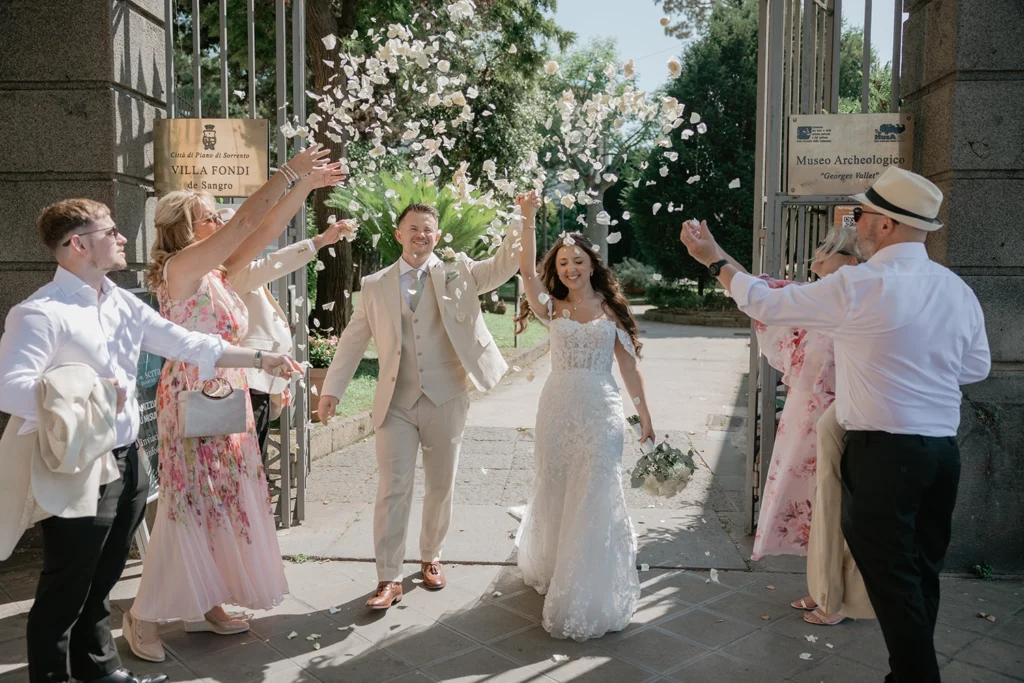
Getting married on the Amalfi Coast is not merely a logistical choice or a backdrop for pretty pictures, it’s a sensory, emotional, and transformative experience. It’s about immersing yourself in a land that celebrates beauty, ritual, and connection. For foreign couples, it’s a rare chance to press pause on the noise of everyday life and step into a dream made real. The experience lingers long after the confetti has settled and the last glass of prosecco has been sipped. It becomes part of your story, woven into the very fabric of who you are together.
The Amalfi Coast invites you to be present. It asks you to slow down, to feel the warm stones underfoot, the scent of lemons in the air, the rustle of olive trees in the breeze. It gives you a place to laugh, cry, embrace, and remember. It allows you to let go of stress and expectations and simply enjoy the unfolding of something real.
So if you’re standing at the edge of this decision, wondering whether a destination wedding is worth the effort, the distance, or the investment, know that what you gain in return is immeasurable. You’re not just planning a wedding. You’re crafting a story that will live inside you and your loved ones for years to come.
If you’re dreaming of a wedding here and want to remember it through storytelling imagery, honest, beautiful, and deeply personal, I’d love to be there with you. Not just as your photographer, but as someone who sees the poetry in the details and helps you remember not only what happened, but how it felt to love and be loved in such an unforgettable place.