
Venice is the only city in Italy that has no equivalent anywhere in the world. Every other Italian city, Rome, Florence, Naples, Palermo, exists within a recognisable tradition of European urban form. Venice exists outside all of it. The water, the absence of cars, the particular silence that settles over the city in the early morning and late evening, the way the light bounces off the canals and wraps around everything from below, none of this can be fully prepared for, even by people who have seen thousands of photographs of the city.

I have photographed in Venice, an elopement in the area around San Marco, and what I remember most is the quality of the afternoon light on the water. The lagoon in the hours before sunset turns a particular shade of gold that I have not seen anywhere else in Italy. The light reflects off the water and illuminates the underside of bridges, the facades of palaces, the faces of people on vaporetti. It fills the city from below in a way that no other kind of light does. It makes Venice almost effortlessly beautiful to photograph, and it makes the technical challenges of the city, the crowds, the narrow calli, the restricted access, worth every difficulty.
This guide covers what I have learned about photographing in Venice, the zones, the light, the logistics, and what couples planning a wedding or elopement here should understand before they arrive. For couples who are deciding between Venice and other Italian destinations, my guide to getting married in Italy covers the broader picture across all regions.
Venice as a Photography Location: What Makes It Different
Venice’s light is unlike any other city in Italy because it comes from two directions simultaneously. The sun from above, and the reflection of the sun off the water from below. This double illumination wraps around subjects in a way that ground-level light in other cities never does. It fills shadows, softens contrasts, and produces a quality of even, warm light that is extraordinarily flattering for portraits. Venice is one of the most forgiving cities in Italy to photograph in, even in conditions that would be difficult elsewhere.

The absence of cars and the presence of water everywhere means the city is also unusually quiet by Italian standards. In the early morning, before the day-trip crowds arrive by ferry from the mainland, Venice has a stillness and intimacy that is impossible to find in Rome or Florence at any hour. The sound of water, the occasional boat engine, footsteps on stone, this atmosphere translates into photographs that feel genuinely private even when they are taken in some of the most famous locations in the world.
The city is divided into six sestieri, neighbourhoods, each with its own character and photographic logic. San Marco is the most immediately dramatic and the most crowded. Dorsoduro is quieter and more residential, with extraordinary light on the Grand Canal in the afternoon. Cannaregio, in the north, has the Jewish Ghetto and the long fondamente along the northern lagoon, some of the most beautiful and least photographed stretches of the city. Understanding which sestiere suits your vision is as important in Venice as choosing the right venue anywhere else in Italy.
The Best Locations in Venice for Wedding Photography
San Marco and the Bacino
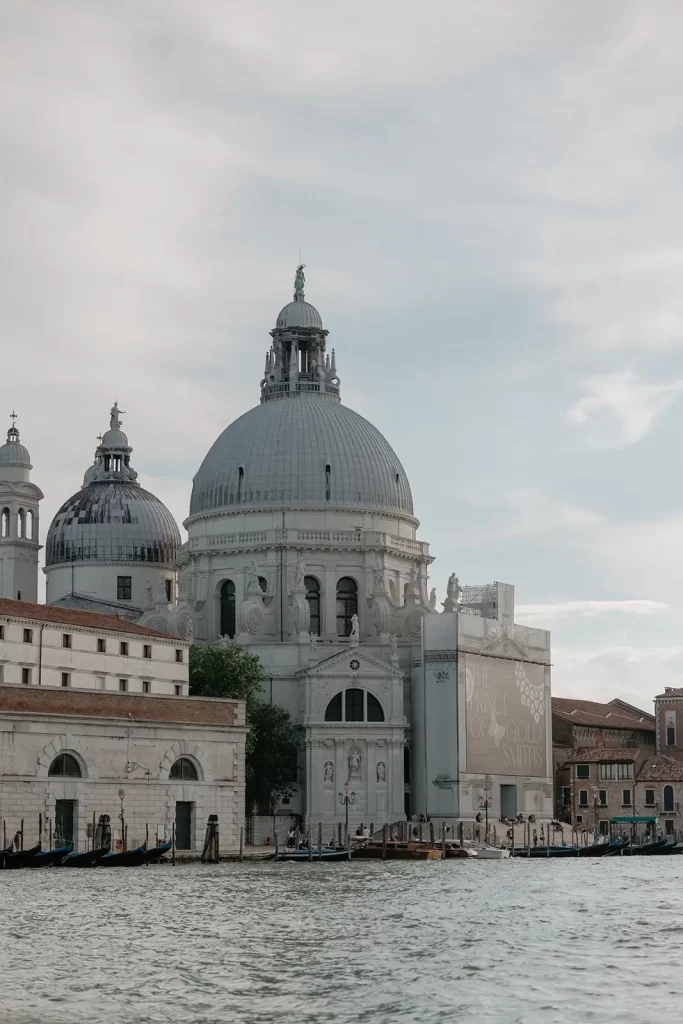
The area around Piazza San Marco is the most immediately iconic in Venice and the most challenging to use well photographically. The piazza itself is overwhelmed with visitors from nine in the morning until late evening in peak season, genuinely inaccessible for clean photography during the day. But the light on the Bacino di San Marco, the open water in front of the Doge’s Palace, in the afternoon is extraordinary.
I have photographed in this area in the late afternoon and what strikes me every time is how the light changes the character of the space completely. The crowds are still there but the quality of the light becomes so strong and so beautiful that it dominates the frame. The golden light on the facade of the Doge’s Palace in the hour before sunset, reflected in the water of the bacino, is one of the most naturally beautiful photography conditions I have encountered in Italy.The Ponte dei Sospiri catches this light from the east and photographs best in the morning when the sun is behind you and the stone is lit directly.

For elopements and intimate ceremonies, the Palazzo Ducale and the surrounding campielli offer extraordinary settings that most visitors walk past without stopping. The small bridges over the rio immediately behind San Marco, away from the main tourist flow, provide intimate compositions with the larger architecture visible in the background.
Dorsoduro
Dorsoduro is my favourite neighbourhood in Venice for photography. The Zattere, the long fondamenta along the southern edge of the sestiere facing the Giudecca canal, catches afternoon light directly and offers one of the most spacious and open perspectives in the city. The water here is wider than in the interior canals, the light is less interrupted, and the relative quiet of the neighbourhood makes it possible to work without the constant pressure of crowds.
The Accademia bridge offers one of the most beautiful views of the Grand Canal in Venice, looking north toward the bend where the canal curves toward San Marco. In the afternoon light, with the gondolas and vaporetti moving on the water below, this is one of the most compositionally satisfying viewpoints in the city. The Campo Santa Margherita, Dorsoduro’s main square, is large enough to breathe and has a neighbourhood quality that is rare in the more tourist-heavy parts of Venice.
Cannaregio
Cannaregio, in the north of the city, is the least visited of Venice’s major sestieri and offers photography conditions that are genuinely different from the centro storico. The Fondamenta della Misericordia and the Fondamenta degli Ormesini, long canals lined with bars and restaurants, have an everyday Venetian quality that feels more honest and less performed than San Marco. The Jewish Ghetto, the oldest in the world, has a particular atmosphere of quiet and historical weight that produces photographs of remarkable depth.
For couples who want images that feel genuinely Venetian rather than generically touristic, Cannaregio is the most rewarding neighbourhood to explore. The light in the northern part of the city in the morning is clean and directional, before the haze that builds over the lagoon in summer begins to soften everything.
Burano
Burano, the island of coloured houses in the northern lagoon, is one of the most immediately photographable places in Italy. The intensely coloured facades, red, yellow, blue, green, pink, reflected in the still water of the canals create compositions of extraordinary richness and visual energy. The island is reached by vaporetto from Fondamente Nove, a journey of about forty minutes, and the travel time adds a genuine sense of arrival and discovery to a photography session here.
The best light on Burano is in the morning, when the sun is still low and the colours of the houses are lit from the side rather than from above. By midday the overhead light flattens the colours and the island fills with day visitors. For a couple session or a post-wedding shoot, arriving at Burano by nine in the morning and spending two hours before the crowds build is the ideal approach.
Torcello
Torcello, further into the northern lagoon beyond Burano, is almost entirely deserted, a small island of Byzantine ruins, a cathedral, and grass. The Cattedrale di Santa Maria Assunta is one of the oldest buildings in the Venetian lagoon, dating from the seventh century, and the atmosphere of the island is one of complete solitude and historical weight. For couples who want an elopement setting that is genuinely private and unlike anything in the city, Torcello is worth the additional travel time.
Elopements in Venice: What I Have Learned
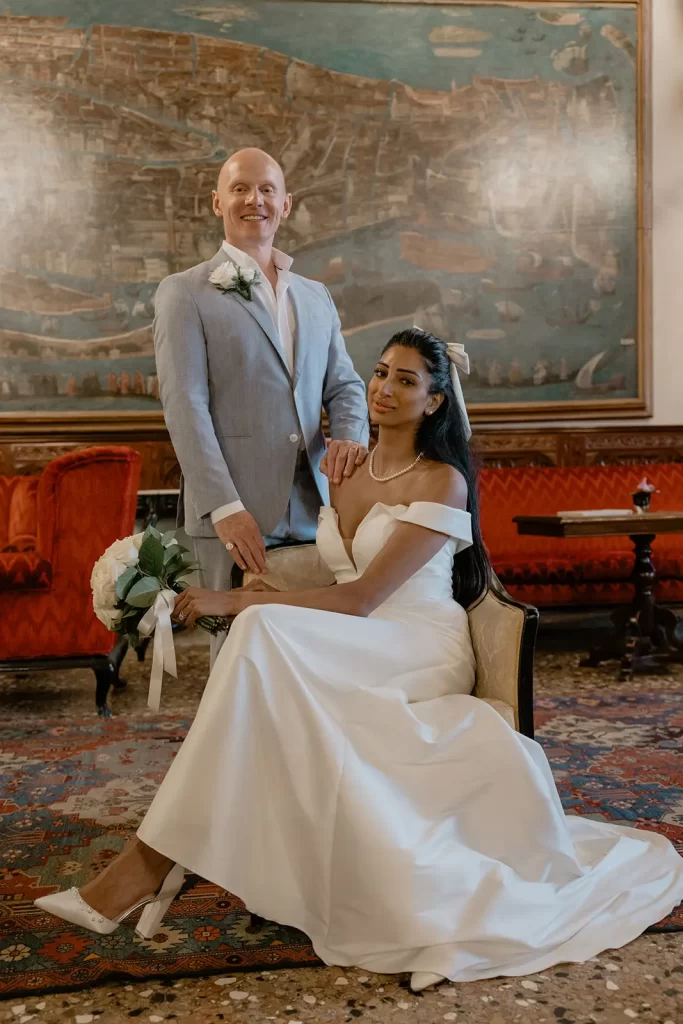
Venice is one of the best cities in Italy for elopements. The scale of the city, intimate enough to feel personal, extraordinary enough to feel significant, suits the spirit of an elopement perfectly. Two people, a witness or two, a brief ceremony, and then the city to yourselves for the afternoon and evening.

Civil ceremonies for foreign couples in Venice require advance coordination with the Comune di Venezia and the relevant Italian consulate in your home country. The process is manageable but requires time, typically three to six months of advance planning for the paperwork alone. Many couples choose a symbolic ceremony instead, which is logistically simpler and can be arranged much closer to the date.
The best approach for a Venice elopement photographically is to plan for three distinct phases of the day. A morning session in a quieter neighbourhood, Cannaregio or Dorsoduro, when the light is clean and the city is relatively quiet. The ceremony itself in the late morning or early afternoon. And then the afternoon golden hour in the area around San Marco and the Bacino, when the light on the water is at its most extraordinary. This structure gives the photographs variety and a genuine sense of the city across different hours and moods.
Practical Advice for Planning Wedding Photography in Venice
Crowds. Venice receives approximately thirty million visitors a year in a city of less than 250,000 residents. In July and August the tourist pressure is genuinely extreme, San Marco is shoulder-to-shoulder from nine until ten at night. The solution is the same as everywhere: early morning, late evening, and working with a photographer who knows which locations are usable at which times of day. The city does not empty in the evening the way Rome or Florence do. The most reliable window for crowd-free photography in peak season is before eight in the morning.
Water and boats. Gondolas, vaporetti, water taxis, all of these are part of the visual vocabulary of Venice and can be used as compositional elements rather than treated as obstacles. A gondola in the foreground of a photograph gives immediate context and atmosphere. A vaporetto crossing the Grand Canal in the background adds movement and scale. Working with the water traffic rather than waiting for it to clear produces more interesting and more authentically Venetian images.

Logistics. Venice has no cars, which means everything arrives and departs by boat or on foot. Getting between locations requires navigating the vaporetto system or hiring water taxis, both of which take longer than driving would. Factor significantly more time between locations than you would in any other Italian city, and discuss the logistics with your photographer in advance so the timeline is realistic.
Season. May, June, September and October are the best months for wedding photography in Venice. The light is excellent, the city is active without being overwhelmed, and the lagoon is at its most beautiful. Winter in Venice, November to February, is a completely different and often more extraordinary experience. The acqua alta, the morning fog on the lagoon, the absence of tourists, and the particular quality of winter light on the water produce images that are unlike anything possible in summer. For couples who are open to a winter wedding, Venice in January or February offers something genuinely rare. My guide to the best seasons for wedding photography in Italy covers how the seasons affect photography across all Italian destinations.
Frequently Asked Questions
What time should you photograph in Venice to avoid crowds?
Before eight in the morning is the only reliable window for crowd-free photography in San Marco and the centro storico during peak season. The neighbourhood of Cannaregio and the Zattere in Dorsoduro are significantly quieter throughout the day. In winter the entire city is manageable at almost any hour, which is one of the strongest arguments for a winter wedding in Venice.
Is Venice good for elopements?
Venice is one of the best cities in Italy for elopements. The scale, the intimacy, the extraordinary light on the water, and the sense of being somewhere genuinely unlike anywhere else in the world make it a compelling choice for couples who want a small, meaningful ceremony rather than a large celebration. The Jewish Ghetto in Cannaregio and the island of Torcello are particularly well suited to intimate elopement photography.
What are the best venues for weddings in Venice?
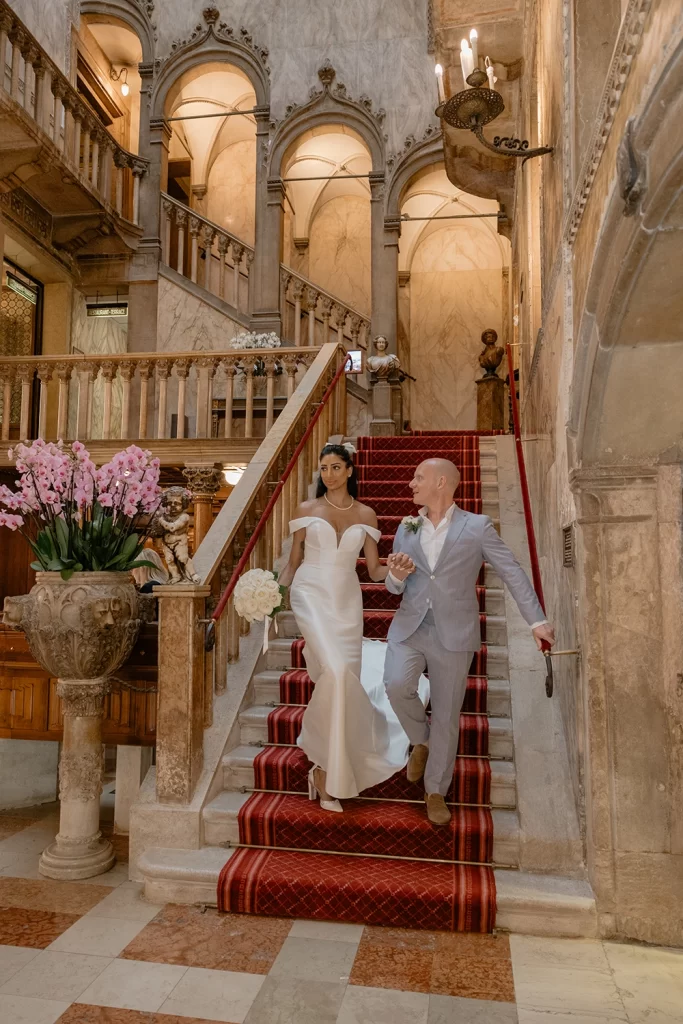
Aman Venice, a 16th-century palazzo on the Grand Canal, is widely considered one of the finest wedding venues in Italy, with extraordinary interiors, direct canal access, and a level of privacy that is rare in Venice. Ca’ Sagredo on the Grand Canal offers frescoed interiors and a grand staircase that photographs magnificently. Palazzo Barbarigo in Dorsoduro is smaller and more intimate, with a garden terrace overlooking the Grand Canal. Each has its own photographic character and requires advance coordination for wedding events.

How does Venice compare to other Italian destinations for wedding photography?
Venice is unlike any other Italian destination. Where Tuscany offers landscape and light, and the Amalfi Coast offers dramatic coastal scenery, Venice offers something that has no equivalent, a city built on water, with a quality of light and a historical atmosphere that produces photographs of extraordinary depth and resonance. For couples who want images that are genuinely unlike any other Italian wedding they have seen, Venice is the most compelling choice.
What is the best season for wedding photography in Venice?
May, June, September and October offer the best combination of light, temperature and manageable crowds. Winter, particularly January and February, offers extraordinary atmosphere and complete privacy, at the cost of cold temperatures and the possibility of acqua alta. Summer is beautiful but demanding in terms of crowds and heat.
Planning a wedding or elopement in Venice?
Browse my portfolio and real weddings to see how I work across Italy, then reach out if what you see feels right.
Written by Cristiana Fiorini, destination wedding photographer based in Rome, working across Italy — from Venice and Lake Garda to Tuscany, the Amalfi Coast, Sicily and Puglia.


